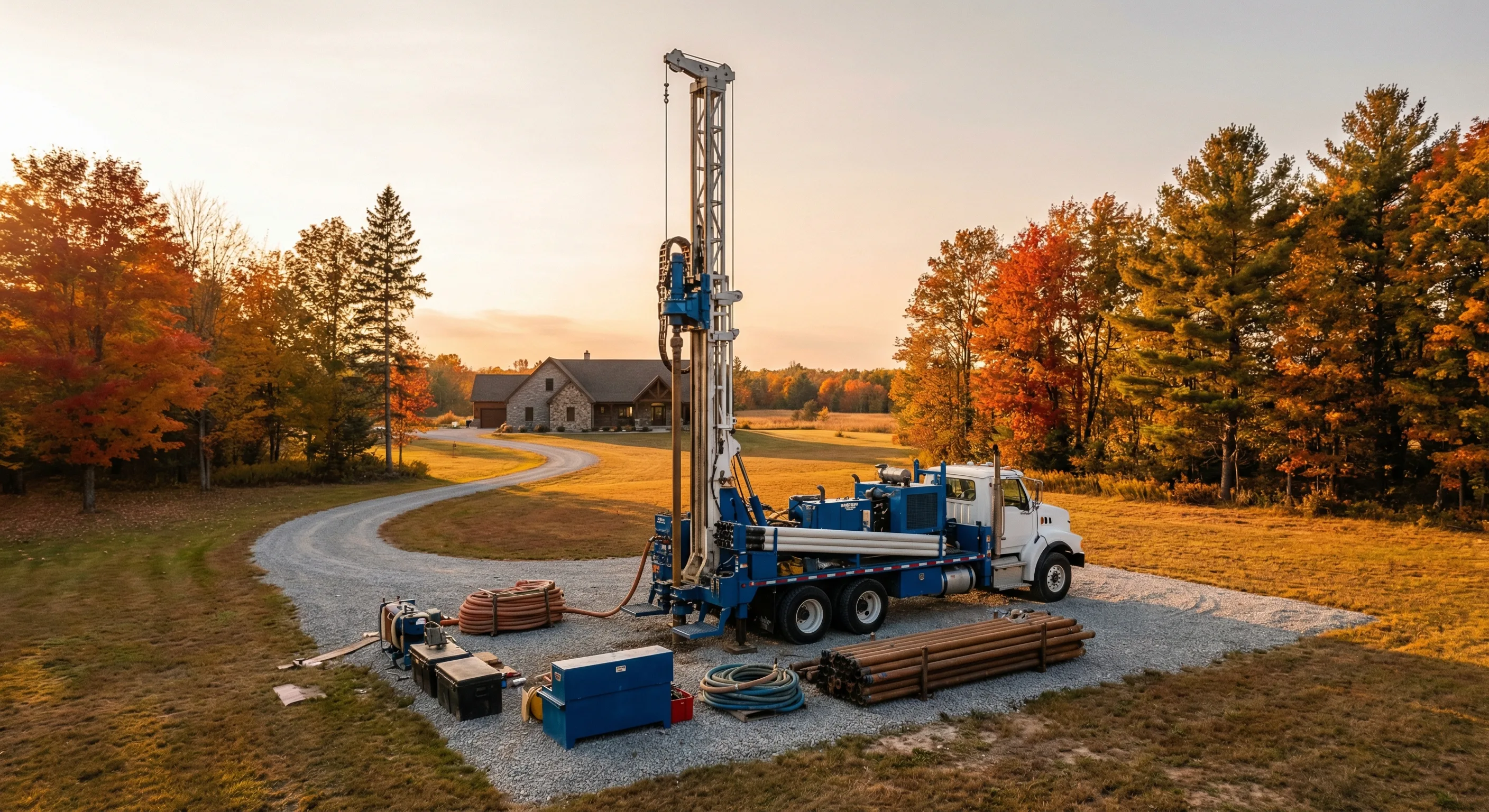
Well Maintenance & Repair in Mulmur Township
Professional well maintenance services for Mulmur Township homes, farms, and businesses.
Mulmur Township occupies some of the highest terrain in the region, with rolling hills and the upper reaches of the Niagara Escarpment creating elevations that significantly influence groundwater availability and well performance. The high elevation means that wells in Mulmur sit above much of the surrounding regional water table, and seasonal yield reduction is the most significant maintenance challenge facing property owners throughout the township.
The elevated terrain of Mulmur creates a groundwater environment where recharge is dependent on local precipitation infiltrating through relatively thin soils into fractured bedrock below. During wet periods — spring snowmelt and fall rains — the water table rises and wells perform strongly. During extended dry periods in summer, the water table drops as gravity drains the hilltop aquifers faster than they are replenished. Wells on the highest ground experience this effect most acutely, with some properties seeing dramatic yield reductions during prolonged dry spells.
The bedrock beneath Mulmur is primarily dolostone and shale of the Niagara Escarpment sequence, and wells draw from fracture networks within these formations. These fractures have limited storage capacity compared to the large overburden aquifers found at lower elevations, making the high-elevation wells inherently more sensitive to recharge patterns. Our maintenance approach in Mulmur focuses on maximizing the well's access to available groundwater through fracture rehabilitation, monitoring seasonal yield trends, and helping property owners plan for water management during vulnerable periods.
Well Maintenance Services We Provide in Mulmur Township
Well Rehabilitation
Restoration of lost well capacity through chemical treatment, mechanical cleaning, and redevelopment. We use targeted chemical solutions to dissolve mineral encrustation and iron bacteria deposits, followed by aggressive surging and pumping to remove loosened material from the well bore. Many wells recover 80 to 100 percent of their original yield through proper rehabilitation.
Well Cleaning
Routine cleaning removes accumulated sediment, scale, and biological growth from the well bore before they cause serious performance decline. We recommend well cleaning every five to ten years for most Simcoe County wells, with more frequent service for wells in areas with heavy iron bacteria or mineral encrustation. Regular cleaning extends well life and maintains water quality.
Casing Repair
Steel well casings can develop corrosion holes, split joints, or cracks over time, particularly in aggressive groundwater chemistry. We assess casing condition through downhole video inspection and repair using casing liners, patching sleeves, or by installing a smaller diameter casing inside the damaged section. Casing repair restores the sanitary seal and structural integrity of the well.
Screen Replacement
Well screens that have corroded through, collapsed, or become so encrusted that cleaning is no longer effective need to be replaced. We remove the failed screen and install a new stainless steel screen matched to the aquifer formation. This can restore a well to near-original performance and is far less costly than drilling a new well.
Common Well Maintenance Issues in Mulmur Township
Seasonal yield reduction during dry summer months
Mulmur's high elevation places wells above much of the regional water table. During summer dry spells, the fractured bedrock aquifer drains faster than it recharges from local precipitation, and the water table drops below productive fractures. Wells that provide ample water in spring may struggle to meet daily demand by August.
Our Solution: We conduct seasonal yield testing to quantify the range of available water through the year. For wells with marginal summer yield, options include deepening to reach fractures below the seasonal low, hydrofracturing to improve connections to deeper water-bearing zones, and installing storage systems that accumulate water during low-demand periods for use during peak times.
Mineral deposits blocking fractures in Escarpment dolostone
The dolostone bedrock beneath Mulmur produces hard water with high calcium and magnesium that precipitates as mineral scale within fractures over time. In high-elevation wells where the fracture network is the sole water source, even moderate scaling can significantly impact the already limited yield.
Our Solution: Chemical rehabilitation using acid treatment dissolves carbonate deposits within the fractures around the wellbore. Because yield margins are tight in Mulmur, even a modest improvement in fracture conductivity can make the difference between adequate and insufficient water supply. We recommend rehabilitation every four to five years for wells showing yield decline.
Wellhead and surface seal damage from exposed hilltop conditions
Properties on Mulmur's exposed hilltops and ridges face harsh winter conditions including wind-driven snow, extreme cold, and significant freeze-thaw cycling. These conditions accelerate wear on wellhead components, surface seals, and above-grade piping, creating potential contamination pathways.
Our Solution: We inspect all exposed components annually and repair or replace damaged caps, seals, and insulation. For particularly exposed sites, we recommend insulated well covers and heat trace on vulnerable piping to prevent freeze damage. Maintaining the surface seal is critical in Mulmur where thin soils offer minimal natural protection.
Plan Your Water Use Around Mulmur's Seasonal Yield Patterns
Understanding your well's seasonal yield pattern is essential for comfortable living in Mulmur Township. Track your well's performance through the year by noting pump run times and pressure recovery rates during different seasons. If you know that August is typically your lowest yield month, plan water-intensive activities like filling pools, pressure washing, and heavy irrigation for spring or fall when the water table is higher. This simple awareness can prevent the stressful experience of running out of water during a dry spell.
Need Well Maintenance in Mulmur Township?
Call us for a free phone consultation or request a site visit. We're your local experts.
Well Maintenance in Mulmur Township: Frequently Asked Questions
Why does my Mulmur Township well run low every summer?
Can hydrofracturing improve my Mulmur well's yield?
Should I install a water storage system for my Mulmur property?
Is it worth deepening my Mulmur well versus drilling a new one?
How do I protect my Mulmur well during extreme winter conditions?
Other Services We Provide in Mulmur Township
Beyond well maintenance, we offer a full range of well and water services in Mulmur Township:
We Also Provide Well Maintenance in Nearby Areas
Serving communities across Simcoe County and Grey County from our home base in Stayner.
Serving Mulmur Township and Surrounding Areas
Ready to Get Started in Mulmur Township?
Contact our experienced team for a free consultation and estimate. Over 60 years of trusted service.