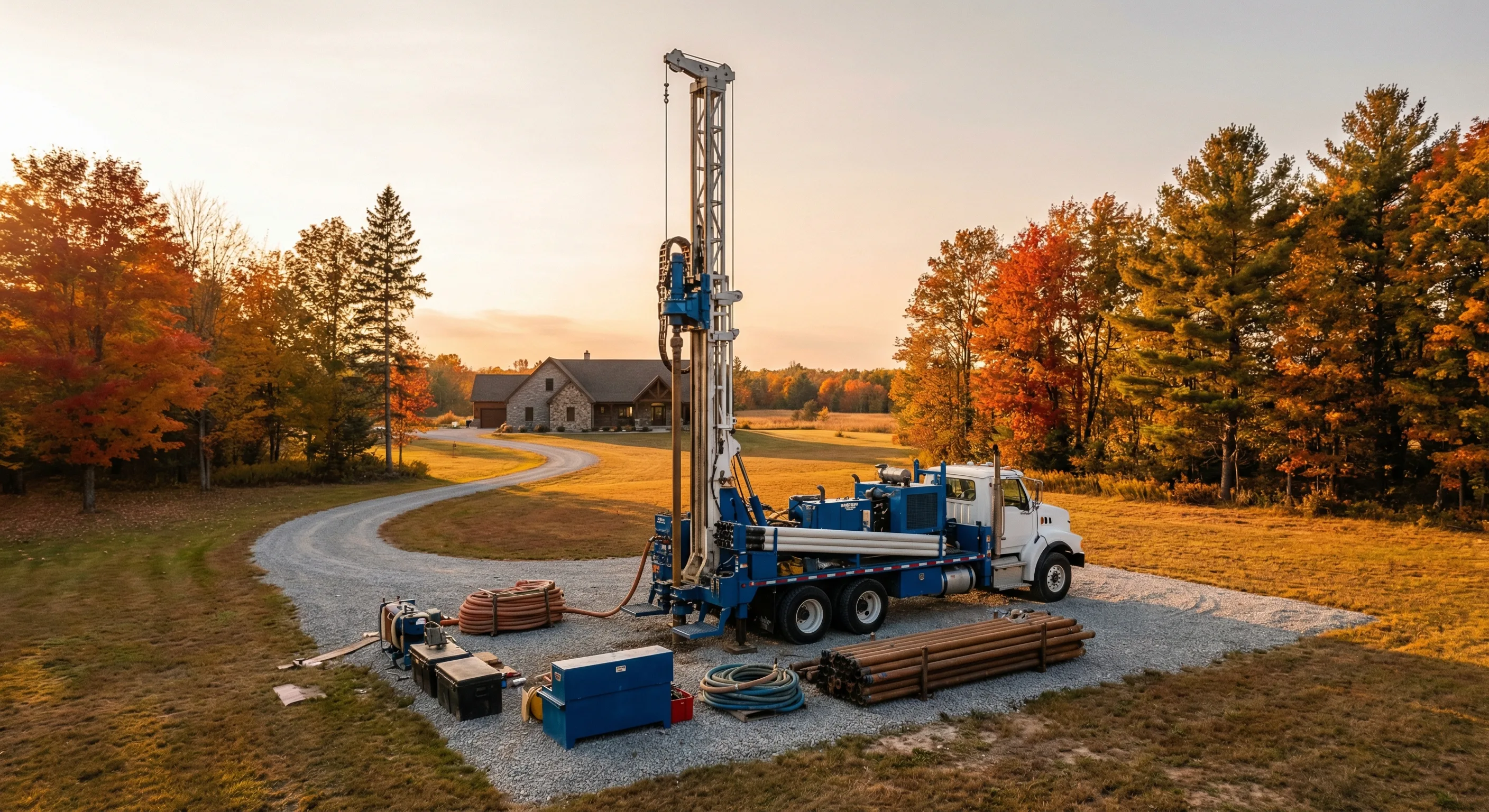
Well Maintenance & Repair in Melancthon Township
Professional well maintenance services for Melancthon Township homes, farms, and businesses.
Melancthon Township sits on the elevated plateau of the Niagara Escarpment's upper surface, and this distinctive geological position creates well maintenance challenges centred on water availability and well depth adequacy. The plateau geology — primarily flat-lying limestone and dolostone capped by thin glacial deposits — means that groundwater moves laterally through bedrock fractures before draining off the escarpment edge, and wells on the plateau must compete for a limited volume of water that is constantly flowing away.
Well deepening needs are the most significant maintenance-related issue in Melancthon Township. Many existing wells were drilled to depths that were adequate when first installed, but changing conditions — increased local water demand from agricultural irrigation, natural fracture aging, and long-term climate variability in precipitation patterns — have gradually reduced the reliability of the original well depth. Property owners notice the problem as inconsistent yield, the pump drawing air during dry periods, or complete loss of water during extended drought.
The agricultural character of Melancthon adds a dimension to well maintenance that goes beyond typical residential concerns. Large farms requiring water for livestock and irrigation place heavy demands on wells that may be approaching their yield limits. Potato and root vegetable farming, which is prominent in the area, requires significant water volumes during the growing season — precisely when the water table is at its seasonal lowest. Our services in Melancthon help property owners assess whether their existing wells can be rehabilitated and deepened to meet current demands, or whether new wells with modern construction at optimal depths are the better path forward.
Well Maintenance Services We Provide in Melancthon Township
Well Rehabilitation
Restoration of lost well capacity through chemical treatment, mechanical cleaning, and redevelopment. We use targeted chemical solutions to dissolve mineral encrustation and iron bacteria deposits, followed by aggressive surging and pumping to remove loosened material from the well bore. Many wells recover 80 to 100 percent of their original yield through proper rehabilitation.
Well Cleaning
Routine cleaning removes accumulated sediment, scale, and biological growth from the well bore before they cause serious performance decline. We recommend well cleaning every five to ten years for most Simcoe County wells, with more frequent service for wells in areas with heavy iron bacteria or mineral encrustation. Regular cleaning extends well life and maintains water quality.
Casing Repair
Steel well casings can develop corrosion holes, split joints, or cracks over time, particularly in aggressive groundwater chemistry. We assess casing condition through downhole video inspection and repair using casing liners, patching sleeves, or by installing a smaller diameter casing inside the damaged section. Casing repair restores the sanitary seal and structural integrity of the well.
Screen Replacement
Well screens that have corroded through, collapsed, or become so encrusted that cleaning is no longer effective need to be replaced. We remove the failed screen and install a new stainless steel screen matched to the aquifer formation. This can restore a well to near-original performance and is far less costly than drilling a new well.
Common Well Maintenance Issues in Melancthon Township
Insufficient well depth for current water demands
Many Melancthon wells were drilled decades ago to depths that matched the water demands of the time. As agricultural operations have expanded and residential water use has increased, these wells no longer reach deep enough into the fractured bedrock to access adequate water volumes, especially during the growing season when demand peaks.
Our Solution: We assess the well's current depth relative to the seasonal water table and the depth of known productive fracture zones in the area. Deepening the existing well through the current casing accesses fractures below the original bottom of the well, often significantly improving yield. We use geological knowledge from nearby wells and our drilling experience in the area to target the most productive depths.
Fracture depletion and reduced connectivity on the plateau
The Melancthon plateau's fracture network has limited groundwater storage compared to thick overburden aquifers. As water drains laterally through fractures toward the escarpment edge, the plateau's interior wells can experience reduced connectivity to their water-bearing fractures during dry periods when recharge is insufficient to maintain the water table.
Our Solution: Hydrofracturing can improve connections between the wellbore and surrounding fracture network, and chemical treatment removes any mineral deposits that have narrowed fracture apertures over time. For wells where the fracture system is inherently limited, we design storage systems that buffer the gap between supply and demand.
Agricultural contamination risk from thin overburden
Melancthon's thin glacial cover over bedrock provides minimal filtration between surface agricultural activities and the groundwater that feeds wells. Fertilizers, pesticides, and manure nutrients can reach the aquifer through fractures and thin soils, posing a contamination risk to drinking water wells.
Our Solution: We ensure the well's surface seal and casing are intact and properly grouted to prevent contaminants from reaching the well along the casing pathway. Water testing for nitrates, bacteria, and relevant agricultural chemicals is included in our maintenance protocol. Where contamination risk is elevated, we recommend UV disinfection and nitrate treatment as added safeguards.
Consider Well Deepening Before Your Melancthon Well Reaches Crisis
If your Melancthon well has shown any signs of declining yield — longer pump run times, pressure drops during heavy use, or complete loss of water during dry August weather — do not wait until you are entirely without water to take action. Well deepening during the drier months when the water table is low allows us to target fractures that remain saturated year-round, ensuring the deepened well is reliable even in worst-case conditions. Scheduling the work proactively means you choose the timing rather than responding to an emergency.
Need Well Maintenance in Melancthon Township?
Call us for a free phone consultation or request a site visit. We're your local experts.
Well Maintenance in Melancthon Township: Frequently Asked Questions
Why is well deepening so common in Melancthon Township?
How deep do wells typically need to be in Melancthon?
Can I use my well for agricultural irrigation in Melancthon?
Should I test my Melancthon well for agricultural chemicals?
How does climate affect my Melancthon well long-term?
Other Services We Provide in Melancthon Township
Beyond well maintenance, we offer a full range of well and water services in Melancthon Township:
We Also Provide Well Maintenance in Nearby Areas
Serving communities across Simcoe County and Grey County from our home base in Stayner.
Serving Melancthon Township and Surrounding Areas
Ready to Get Started in Melancthon Township?
Contact our experienced team for a free consultation and estimate. Over 60 years of trusted service.