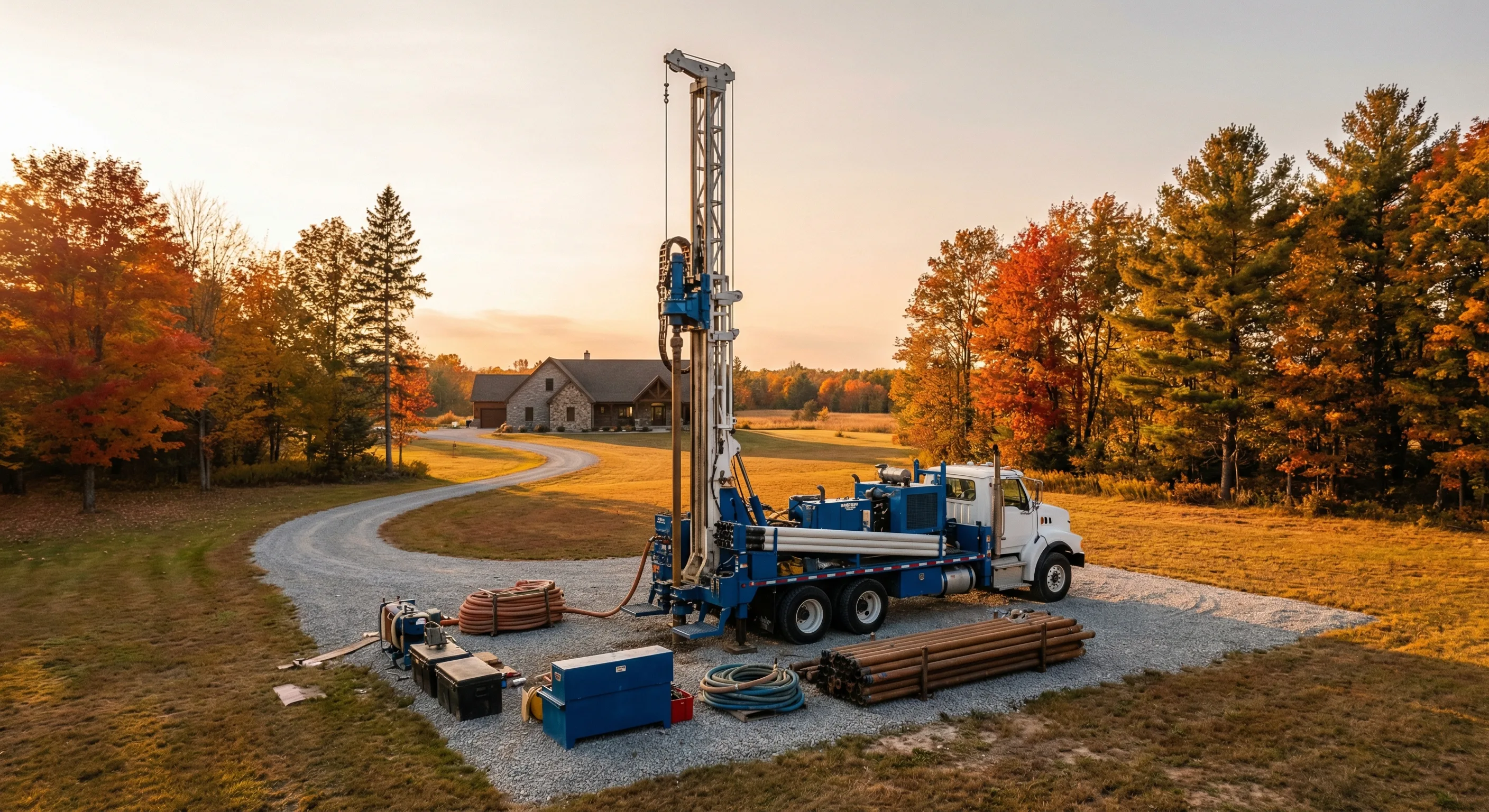
Well Maintenance & Repair in Blue Mountains
Professional well maintenance services for The Blue Mountains homes, farms, and businesses.
The Town of Blue Mountains spans some of the most geologically varied terrain in the region, from the Niagara Escarpment face through rolling uplands to the Georgian Bay shoreline. Wells throughout Blue Mountains predominantly draw water from fractured bedrock aquifers in limestone and dolostone formations, and these fracture-fed systems require specialized maintenance approaches that differ significantly from wells in overburden aquifers.
Fractured bedrock wells are inherently dependent on the network of cracks and fissures that channel groundwater to the wellbore. Over time, these fractures can become clogged with mineral precipitates — particularly calcite and iron compounds — that slowly reduce the volume of water reaching your well. Homeowners often experience this as a gradual decline in yield that worsens during dry summer months when the water table drops and fewer fractures remain below the pumping level. Professional well rehabilitation using chemical treatments and hydrofracturing techniques can reopen these blocked pathways and restore well performance.
The varied elevations across Blue Mountains also mean that well depths range considerably, from relatively shallow wells along the lower slopes to deep wells on the Escarpment plateau. Properties at higher elevations face particular challenges with seasonal yield reduction when winter snowmelt and spring recharge haven't fully replenished the deeper fracture networks. Our maintenance program for Blue Mountains wells includes regular yield monitoring and proactive rehabilitation scheduling to keep your water supply reliable through all seasons.
Well Maintenance Services We Provide in The Blue Mountains
Well Rehabilitation
Restoration of lost well capacity through chemical treatment, mechanical cleaning, and redevelopment. We use targeted chemical solutions to dissolve mineral encrustation and iron bacteria deposits, followed by aggressive surging and pumping to remove loosened material from the well bore. Many wells recover 80 to 100 percent of their original yield through proper rehabilitation.
Well Cleaning
Routine cleaning removes accumulated sediment, scale, and biological growth from the well bore before they cause serious performance decline. We recommend well cleaning every five to ten years for most Simcoe County wells, with more frequent service for wells in areas with heavy iron bacteria or mineral encrustation. Regular cleaning extends well life and maintains water quality.
Casing Repair
Steel well casings can develop corrosion holes, split joints, or cracks over time, particularly in aggressive groundwater chemistry. We assess casing condition through downhole video inspection and repair using casing liners, patching sleeves, or by installing a smaller diameter casing inside the damaged section. Casing repair restores the sanitary seal and structural integrity of the well.
Screen Replacement
Well screens that have corroded through, collapsed, or become so encrusted that cleaning is no longer effective need to be replaced. We remove the failed screen and install a new stainless steel screen matched to the aquifer formation. This can restore a well to near-original performance and is far less costly than drilling a new well.
Common Well Maintenance Issues in The Blue Mountains
Mineral scaling in bedrock fractures reducing well yield
Blue Mountains wells rely on fractured limestone and dolostone aquifers where dissolved calcium carbonate naturally precipitates as calcite within the fracture network. This scaling progressively narrows the fractures that deliver water to your well, causing a steady decline in available flow.
Our Solution: We perform chemical rehabilitation using acid treatment formulated for carbonate rock, which dissolves calcite deposits within the fractures around the wellbore. Combined with aggressive surging and air-lift pumping, this typically restores significant yield to scaled-up wells.
Seasonal yield loss at higher Escarpment elevations
Properties on the upper slopes and plateau of the Blue Mountains sit above much of the regional water table. During late summer and early fall, the fracture network at these elevations can partially drain, reducing well yield substantially until fall rains and spring snowmelt recharge the system.
Our Solution: We evaluate the well's depth relative to seasonal water levels and may recommend deepening to access fractures that remain saturated year-round. Storage tank systems can also buffer seasonal yield shortfalls by accumulating water during low-demand periods.
Iron bacteria clogging fractures and well screens
Iron-rich groundwater in certain Blue Mountains bedrock formations supports iron-oxidizing bacteria that produce rust-coloured slime. This biofilm accumulates on well screens and within fractures near the wellbore, restricting water flow and degrading water quality.
Our Solution: Our rehabilitation protocol combines mechanical cleaning of the casing and screen with a targeted chlorine and acid treatment to kill bacteria and dissolve their iron deposits. We recommend annual shock chlorination as preventive maintenance for wells with recurring iron bacteria issues.
Surface water intrusion through shallow bedrock fractures
In areas where bedrock is close to surface on the Blue Mountains escarpment, shallow fractures can allow surface water and runoff to reach the well without adequate natural filtration. This leads to bacterial contamination, especially after heavy rainfall or spring snowmelt.
Our Solution: We inspect the wellhead seal, surface grout, and upper casing integrity. Repairing the surface seal and grouting the annular space between casing and bedrock prevents surface water from travelling down along the outside of the casing to reach the aquifer.
Monitor Your Blue Mountains Well Yield Seasonally
Fractured bedrock wells in the Blue Mountains can be sensitive to seasonal recharge patterns, especially at higher elevations. Keep track of how long your pump runs and whether your water pressure changes between seasons. If you notice the pump cycling more frequently in late summer or early fall, it may indicate that your well's yield is dropping as the water table falls. Early intervention with rehabilitation or storage system planning is far less disruptive than running out of water during a dry spell.
Need Well Maintenance in The Blue Mountains?
Call us for a free phone consultation or request a site visit. We're your local experts.
Well Maintenance in The Blue Mountains: Frequently Asked Questions
Why has my Blue Mountains well yield decreased over the years?
What is hydrofracturing and can it help my Blue Mountains well?
How do I know if my well needs maintenance or a new well entirely?
Is well water quality different at different elevations in Blue Mountains?
Should I be concerned about well maintenance for my Blue Mountains ski chalet?
Other Services We Provide in The Blue Mountains
Beyond well maintenance, we offer a full range of well and water services in The Blue Mountains:
We Also Provide Well Maintenance in Nearby Areas
Serving communities across Simcoe County and Grey County from our home base in Stayner.
Serving The Blue Mountains and Surrounding Areas
Ready to Get Started in The Blue Mountains?
Contact our experienced team for a free consultation and estimate. Over 60 years of trusted service.