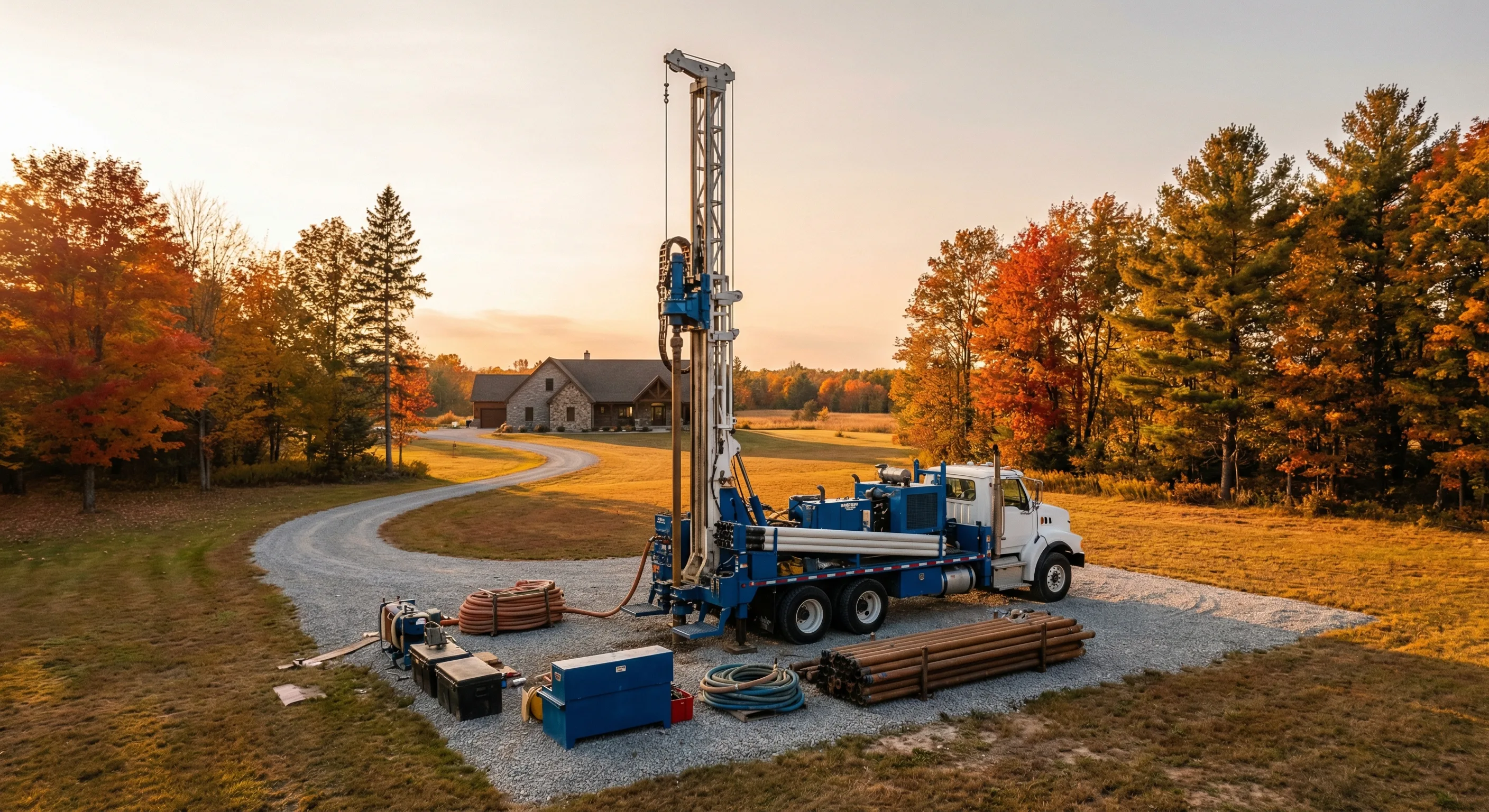
Well Maintenance & Repair in Adjala-Tosorontio
Professional well maintenance services for Adjala-Tosorontio homes, farms, and businesses.
Adjala-Tosorontio sits along the eastern fringe of the Niagara Escarpment, a geological boundary zone where the bedrock transitions from the hard dolostone cap rock of the Escarpment to the softer shale formations of the lowlands. This transitional geology creates some of the most variable water quality conditions in the region — wells only a short distance apart can produce water with dramatically different mineral profiles, hardness levels, and treatment requirements depending on which geological formation they tap into.
Variable water quality is the defining characteristic of well ownership in Adjala-Tosorontio. Properties on the upper Escarpment fringe typically encounter hard dolostone or limestone bedrock with high calcium and magnesium levels. Moving east toward the lowlands, wells may penetrate shale formations that contribute sulphur, elevated sodium, and different mineral signatures. In the transition zone itself, wells can intersect multiple geological units, drawing water from layers with conflicting chemistry that creates complex treatment and maintenance challenges.
Our maintenance approach in Adjala-Tosorontio begins with understanding exactly what geological formation each well draws from. This determines the expected water chemistry, the types of deposits and problems the well will develop over time, and the maintenance strategies that will be most effective. Whether your well produces the hard, mineral-laden water typical of the Escarpment or the sulphur-bearing, softer water common in the shale zones, our service is tailored to your specific conditions rather than applying a generic maintenance protocol.
Well Maintenance Services We Provide in Adjala-Tosorontio
Well Rehabilitation
Restoration of lost well capacity through chemical treatment, mechanical cleaning, and redevelopment. We use targeted chemical solutions to dissolve mineral encrustation and iron bacteria deposits, followed by aggressive surging and pumping to remove loosened material from the well bore. Many wells recover 80 to 100 percent of their original yield through proper rehabilitation.
Well Cleaning
Routine cleaning removes accumulated sediment, scale, and biological growth from the well bore before they cause serious performance decline. We recommend well cleaning every five to ten years for most Simcoe County wells, with more frequent service for wells in areas with heavy iron bacteria or mineral encrustation. Regular cleaning extends well life and maintains water quality.
Casing Repair
Steel well casings can develop corrosion holes, split joints, or cracks over time, particularly in aggressive groundwater chemistry. We assess casing condition through downhole video inspection and repair using casing liners, patching sleeves, or by installing a smaller diameter casing inside the damaged section. Casing repair restores the sanitary seal and structural integrity of the well.
Screen Replacement
Well screens that have corroded through, collapsed, or become so encrusted that cleaning is no longer effective need to be replaced. We remove the failed screen and install a new stainless steel screen matched to the aquifer formation. This can restore a well to near-original performance and is far less costly than drilling a new well.
Common Well Maintenance Issues in Adjala-Tosorontio
Variable water quality from mixed geological formations
Adjala-Tosorontio's position on the Escarpment fringe means wells may draw from dolostone, limestone, shale, or a combination of formations. Water quality can change as different fracture zones contribute varying proportions of water over time, causing shifts in hardness, sulphur content, and mineral concentrations that seem to happen without explanation.
Our Solution: We perform comprehensive water testing to establish a baseline chemistry profile and identify which geological formations contribute to your water supply. If quality shifts are related to well condition, maintenance can address the issue. If multiple formations are contributing, we may recommend casing modifications to isolate the most desirable water-bearing zone.
Sulphur odour from shale bedrock zones
The shale formations in the eastern portions of Adjala-Tosorontio naturally contain sulphide minerals and organic material that produce hydrogen sulphide gas in the groundwater. Wells drilled through or screened in these zones produce water with the characteristic rotten-egg smell that ranges from mild to severe.
Our Solution: Shock chlorination reduces sulphate-reducing bacteria within the well. If the sulphur originates from the formation, we evaluate whether the well can be modified to case off the shale zone and draw exclusively from cleaner bedrock. An aeration or oxidation treatment system at the surface provides reliable ongoing odour removal.
Hard water scaling from Escarpment bedrock
Wells on the Escarpment fringe in Adjala-Tosorontio produce very hard water as groundwater dissolves through calcium and magnesium-rich dolostone. This hardness deposits as scale on well screens, pump components, pipes, and appliances, reducing flow and efficiency throughout the system.
Our Solution: Professional well descaling using chemical treatment removes accumulated mineral deposits from the screen and near-well formation, restoring flow capacity. A water softener at the surface protects household plumbing. We recommend descaling every four to six years for wells in the hardest water zones of the township.
Low-yield wells from tight or poorly fractured shale
Shale formations generally have lower permeability than limestone or dolostone, and wells drilled into these zones in eastern Adjala-Tosorontio may have limited yield from the start. Over time, what little fracture conductivity exists can decline further from mineral precipitation and fines migration.
Our Solution: We assess whether rehabilitation techniques such as hydrofracturing or chemical treatment can improve yield from the existing fracture network. If the formation is inherently low-yielding, storage systems or well deepening into underlying limestone may provide a more reliable water supply.
Get a Comprehensive Water Analysis to Guide Your Adjala-Tosorontio Well Maintenance
Given the geological variability across Adjala-Tosorontio, a comprehensive water analysis is the single most valuable starting point for well maintenance. Beyond the standard bacteria test, include a full mineral panel covering hardness, iron, manganese, sulphide, sodium, and pH at minimum. This chemical fingerprint tells us which geological formation your water comes from and predicts the types of deposits and problems your well will develop. With this information, we can design a maintenance schedule that targets your specific challenges rather than guessing based on generalizations about the area.
Need Well Maintenance in Adjala-Tosorontio?
Call us for a free phone consultation or request a site visit. We're your local experts.
Well Maintenance in Adjala-Tosorontio: Frequently Asked Questions
Why does my water quality change from season to season in Adjala-Tosorontio?
Is Adjala-Tosorontio well water safe to drink without treatment?
Can the sulphur smell in my water be eliminated permanently?
How do I know which geological formation my well draws from?
What makes Adjala-Tosorontio different from other areas for well maintenance?
Other Services We Provide in Adjala-Tosorontio
Beyond well maintenance, we offer a full range of well and water services in Adjala-Tosorontio:
We Also Provide Well Maintenance in Nearby Areas
Serving communities across Simcoe County and Grey County from our home base in Stayner.
Serving Adjala-Tosorontio and Surrounding Areas
Ready to Get Started in Adjala-Tosorontio?
Contact our experienced team for a free consultation and estimate. Over 60 years of trusted service.