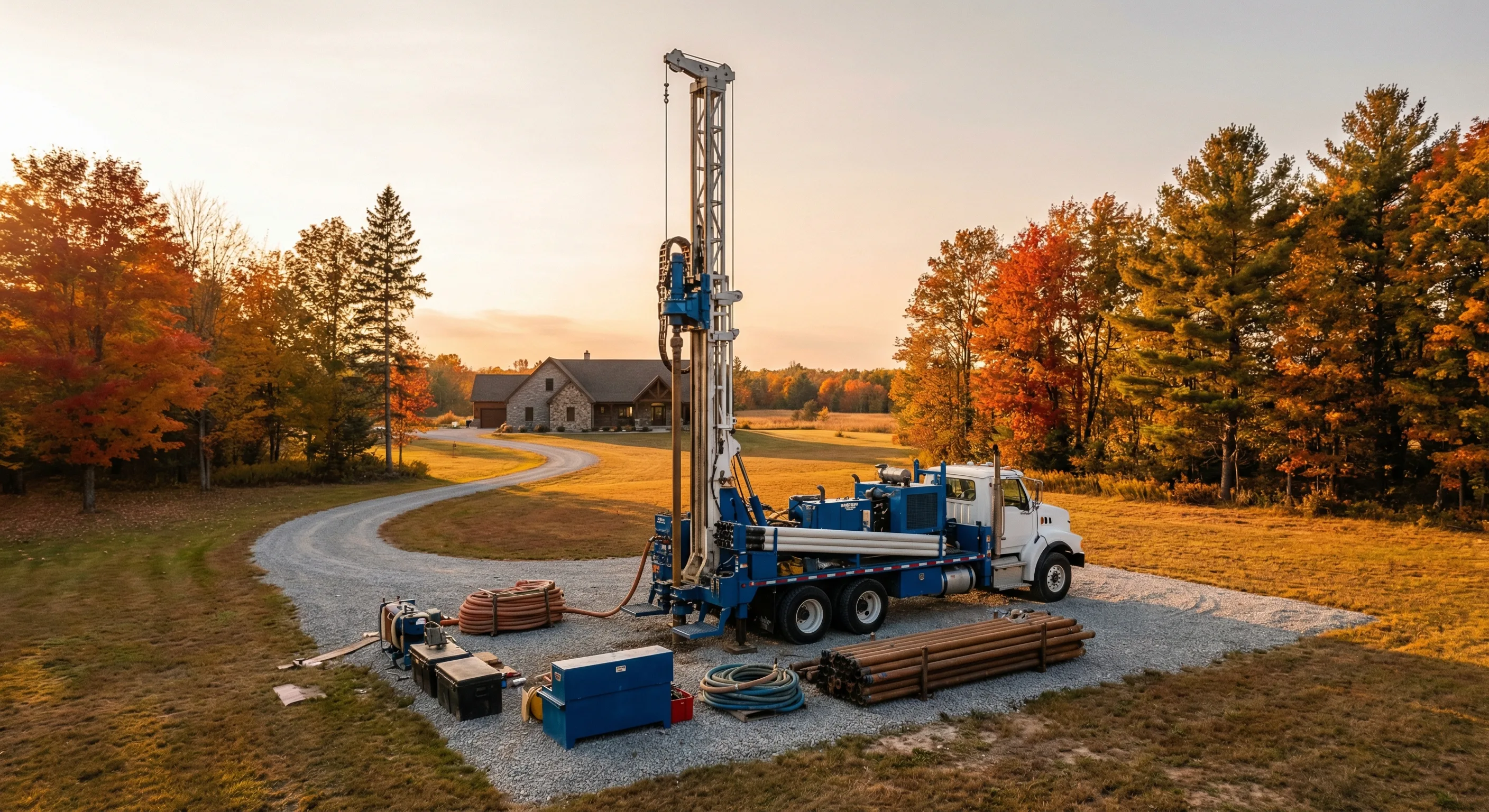
Well Installation & Completion in Wasaga Beach
Professional well installation services for Wasaga Beach homes, farms, and businesses.
Completing a well in Wasaga Beach demands careful attention to the sandy lacustrine soils that define this area. The thick blanket of sand deposited by glacial Lake Algonquin requires specific screening and casing strategies to produce clean, sand-free water for decades. Proper well screen selection is arguably the most critical component of any Wasaga Beach installation — the screen slot size must be precisely matched to the grain size of the surrounding sand formation to prevent fine particles from entering the well while maintaining strong flow. Our installation process begins immediately after drilling, with a thorough evaluation of the formation samples collected during the drilling phase. We select the appropriate screen type and slot size based on these samples, then install the screen assembly at the optimal depth to intercept the target aquifer. Casing is set through the full depth of the overburden and grouted into place with cement-based sealant to create a watertight barrier between the sandy surface layers and the deeper aquifer. A pitless adapter connects the well casing to the underground water line below the frost depth, keeping the connection protected from freezing and surface contamination. After the physical installation, we develop the well by surging and pumping to remove drilling debris and fine particles from the formation around the screen, then disinfect the entire system with chlorine solution. Final water testing confirms the quality of your new water supply. Every step of this process is tailored to the sandy geology that makes Wasaga Beach installations unique within our service area.
Well Installation Services We Provide in Wasaga Beach
Well Casing & Screening
Installation of steel or PVC well casing to the required depth, with stainless steel screens sized to match the aquifer formation. Proper casing protects the well from collapse and prevents surface water from entering the borehole. Screen slot sizes are selected based on the grain size of the aquifer material to maximize yield while preventing sand production.
Well Development
After casing and screening are installed, the well must be developed to remove drilling mud, fine sediment, and disturbed formation material from around the screen. We use surging, jetting, and controlled pumping techniques to clean the well bore and establish a natural gravel pack around the screen, maximizing long-term yield and water clarity.
Sealing & Grouting
Annular sealing with bentonite or cement grout fills the space between the well casing and the borehole wall. This seal prevents surface water, shallow groundwater, and contaminants from migrating down the outside of the casing into the aquifer. Ontario Regulation 903 specifies minimum sealing depths and material requirements that we follow rigorously on every installation.
Pitless Adapter Installation
A pitless adapter provides a sanitary, below-frost-line connection between the well casing and the horizontal water line running to your building. This eliminates the need for a well pit, which is no longer permitted under Ontario regulations due to contamination risk. We install pitless adapters at a depth of at least five feet to protect against freezing in Simcoe County winters.
Common Well Installation Issues in Wasaga Beach
Incorrect screen sizing allowing sand to enter the well
The lacustrine sand in Wasaga Beach varies in grain size from fine to medium-coarse depending on depth and location. If the well screen slot size is too large for the local formation, sand passes through and enters the pump and plumbing system. This is the single most common cause of sand problems in Wasaga Beach wells.
Our Solution: We perform grain-size analysis on formation samples collected during drilling and select a screen with slots precisely sized to retain the formation sand while allowing water to flow freely. Where the sand is very fine, we install a gravel pack between the screen and the formation to add an extra layer of filtration. This careful sizing process eliminates sand entry at the source.
Inadequate annular seal in sandy overburden
The loose sandy soils in Wasaga Beach can make it difficult to achieve a solid grout seal between the well casing and the borehole wall. If grout does not fill the annular space completely, voids can form that allow surface water to migrate down alongside the casing and contaminate the aquifer.
Our Solution: We use tremie pipe grouting methods to place cement-based grout from the bottom of the annular space upward, ensuring complete fill without voids. In sandy formations, we may also use bentonite chips or a bentonite-cement mixture specifically formulated for unconsolidated conditions. The seal is verified before we proceed with pump installation.
Pitless adapter installation in frost-susceptible sandy soil
Sandy soils transmit frost deeper than clay soils, and Wasaga Beach winter frost can penetrate well below one metre. If the pitless adapter or the water line connection is not set deep enough, it can freeze during cold snaps, cutting off the water supply and potentially cracking fittings.
Our Solution: We install pitless adapters below the maximum local frost depth and insulate the connection where necessary. The water line from the well to the house is buried below the frost line for its entire length. We verify the burial depth against local frost records to ensure freeze protection even during the coldest Wasaga Beach winters.
Insist on Grain-Size Analysis for Your Wasaga Beach Well Screen
Do not accept a well screen that was selected based on general assumptions about sand size. The lacustrine sand in Wasaga Beach varies in grain size across the area and at different depths. Insist that your contractor perform a grain-size analysis on the actual formation samples from your borehole. This simple laboratory test ensures the screen slot size is precisely matched to your sand, preventing sand infiltration problems that can plague poorly completed wells for their entire lifespan.
Need Well Installation in Wasaga Beach?
Call us for a free phone consultation or request a site visit. We're your local experts.
Well Installation in Wasaga Beach: Frequently Asked Questions
What type of well screen is best for Wasaga Beach sand?
How is the well casing sealed in Wasaga Beach installations?
What is well development and why is it important in Wasaga Beach?
How deep is the pitless adapter installed in Wasaga Beach wells?
Do you disinfect the well after installation in Wasaga Beach?
How long does the complete well installation take in Wasaga Beach?
Other Services We Provide in Wasaga Beach
Beyond well installation, we offer a full range of well and water services in Wasaga Beach:
We Also Provide Well Installation in Nearby Areas
Serving communities across Simcoe County and Grey County from our home base in Stayner.
Serving Wasaga Beach and Surrounding Areas
Ready to Get Started in Wasaga Beach?
Contact our experienced team for a free consultation and estimate. Over 60 years of trusted service.