Well Installation & Completion in Springwater Township
Professional well installation services for Springwater Township homes, farms, and businesses.
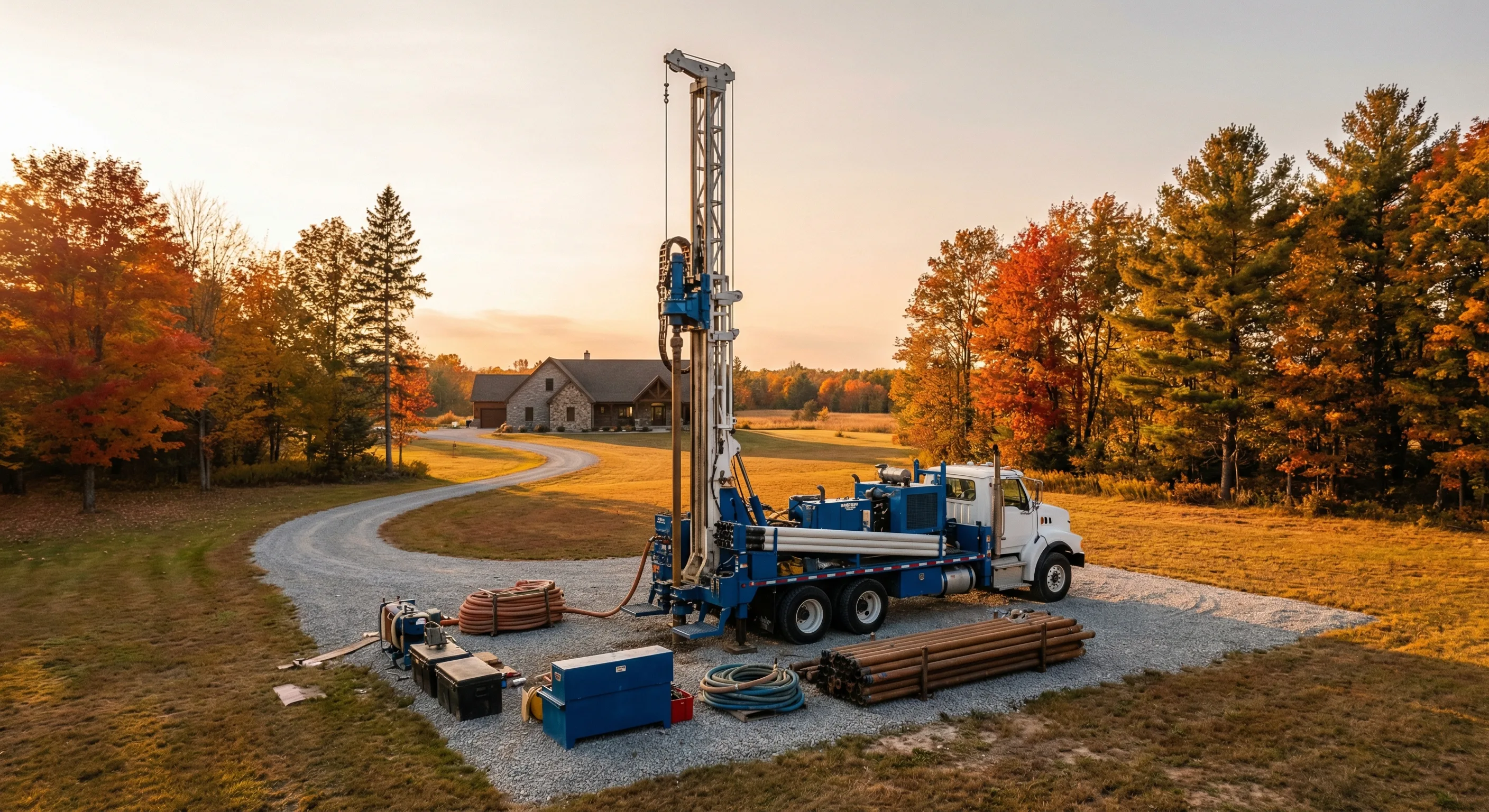
Well installation in Springwater Township involves managing the thick clay and till deposits that distinguish this area from most of our service region. Casing must extend through 30 to 50 metres or more of dense glacial clay before reaching bedrock, making Springwater wells among the most heavily cased in the area. This deep casing requires meticulous grouting to seal the full length of the annular space without leaving voids that could allow communication between different geological layers. The grouting process in thick clay is actually more straightforward than in mixed formations because the clay itself provides a relatively impermeable envelope around the casing, but the sheer depth requires careful tremie pipe management and adequate grout volume. Once the casing is sealed and the well completed into the bedrock aquifer below, the pump must be selected to handle the considerable depth. Deeper wells require more powerful pumps to lift water the greater distance to the surface, and the drop pipe and wiring must be rated for the increased length. The thick clay overburden in Springwater does offer one significant advantage for well completion: the dense clay provides excellent natural protection of the bedrock aquifer from surface contamination. This natural barrier, combined with proper casing and grouting, makes Springwater wells among the best-protected from surface water influence. We complete the installation with a pitless adapter, frost-protected water line, pressure system, and full disinfection and testing protocol.
Well Installation Services We Provide in Springwater Township
Well Casing & Screening
Installation of steel or PVC well casing to the required depth, with stainless steel screens sized to match the aquifer formation. Proper casing protects the well from collapse and prevents surface water from entering the borehole. Screen slot sizes are selected based on the grain size of the aquifer material to maximize yield while preventing sand production.
Well Development
After casing and screening are installed, the well must be developed to remove drilling mud, fine sediment, and disturbed formation material from around the screen. We use surging, jetting, and controlled pumping techniques to clean the well bore and establish a natural gravel pack around the screen, maximizing long-term yield and water clarity.
Sealing & Grouting
Annular sealing with bentonite or cement grout fills the space between the well casing and the borehole wall. This seal prevents surface water, shallow groundwater, and contaminants from migrating down the outside of the casing into the aquifer. Ontario Regulation 903 specifies minimum sealing depths and material requirements that we follow rigorously on every installation.
Pitless Adapter Installation
A pitless adapter provides a sanitary, below-frost-line connection between the well casing and the horizontal water line running to your building. This eliminates the need for a well pit, which is no longer permitted under Ontario regulations due to contamination risk. We install pitless adapters at a depth of at least five feet to protect against freezing in Simcoe County winters.
Common Well Installation Issues in Springwater Township
Grouting long casing runs through deep clay
Springwater wells may need 30 to 50 metres of casing grouted from bottom to top. At these depths, grout placement requires extended tremie pipe and careful management to ensure the grout column does not bridge or leave voids. Incomplete grouting can create zones where different aquifer layers interconnect through the annular space.
Our Solution: We use continuous tremie pipe grouting with the pipe pulled upward as grout fills from the bottom. We monitor the volume of grout placed against the calculated annular volume to verify complete fill. For very deep casing, we may grout in stages to prevent column pressure from exceeding the capability of the tremie system. The result is a verified, continuous seal for the full casing length.
Higher pump horsepower requirements for deep wells
The depth of Springwater wells means the pump must lift water a greater distance than in areas with shallower wells. A half-horsepower pump that works fine for a 20-metre well is insufficient for a 60-metre well. Using an undersized pump results in low flow rates and excessive run times that shorten pump life.
Our Solution: We size the pump based on both the well depth and the required flow rate, typically selecting three-quarter to one-and-a-half horsepower submersible pumps for Springwater applications. The wire gauge is also upsized for longer runs to prevent voltage drop. Proper sizing ensures the pump delivers adequate flow without overworking, maximizing both performance and lifespan.
Clay swelling around casing over time
Some clay formations in Springwater contain swelling clays that expand when exposed to water during drilling and contract as they dry. This cyclical swelling and shrinking can create micro-gaps around the casing grout if the grout itself does not flex or if bentonite was not used in appropriate locations.
Our Solution: We use grout formulations that bond well to both steel casing and clay environments. In zones with known swelling clay, we may incorporate bentonite into the grout mix to maintain flexibility and self-sealing properties. The goal is a seal that remains intact as the surrounding clay responds to natural moisture cycles.
Invest in the Right Pump for Your Deep Springwater Well
Cutting corners on pump horsepower for a deep Springwater well is a false economy. An undersized pump struggles to lift water from 50 or 60 metres, runs excessively long cycles, overheats, and fails years before its rated lifespan. The correct pump, properly sized for your well depth and household demand, delivers reliable water pressure and lasts 10 to 15 years or more. The price difference between the right pump and the wrong one is modest compared to the cost of a premature replacement at depth.
Need Well Installation in Springwater Township?
Call us for a free phone consultation or request a site visit. We're your local experts.
Well Installation in Springwater Township: Frequently Asked Questions
Why does my Springwater well need so much casing?
Does the deep clay in Springwater protect my well from contamination?
What size pump do deep Springwater wells require?
Is the installation more expensive in Springwater because wells are deeper?
How long does installation take after drilling is complete in Springwater?
Other Services We Provide in Springwater Township
Beyond well installation, we offer a full range of well and water services in Springwater Township:
We Also Provide Well Installation in Nearby Areas
Serving communities across Simcoe County and Grey County from our home base in Stayner.
Serving Springwater Township and Surrounding Areas
Ready to Get Started in Springwater Township?
Contact our experienced team for a free consultation and estimate. Over 60 years of trusted service.