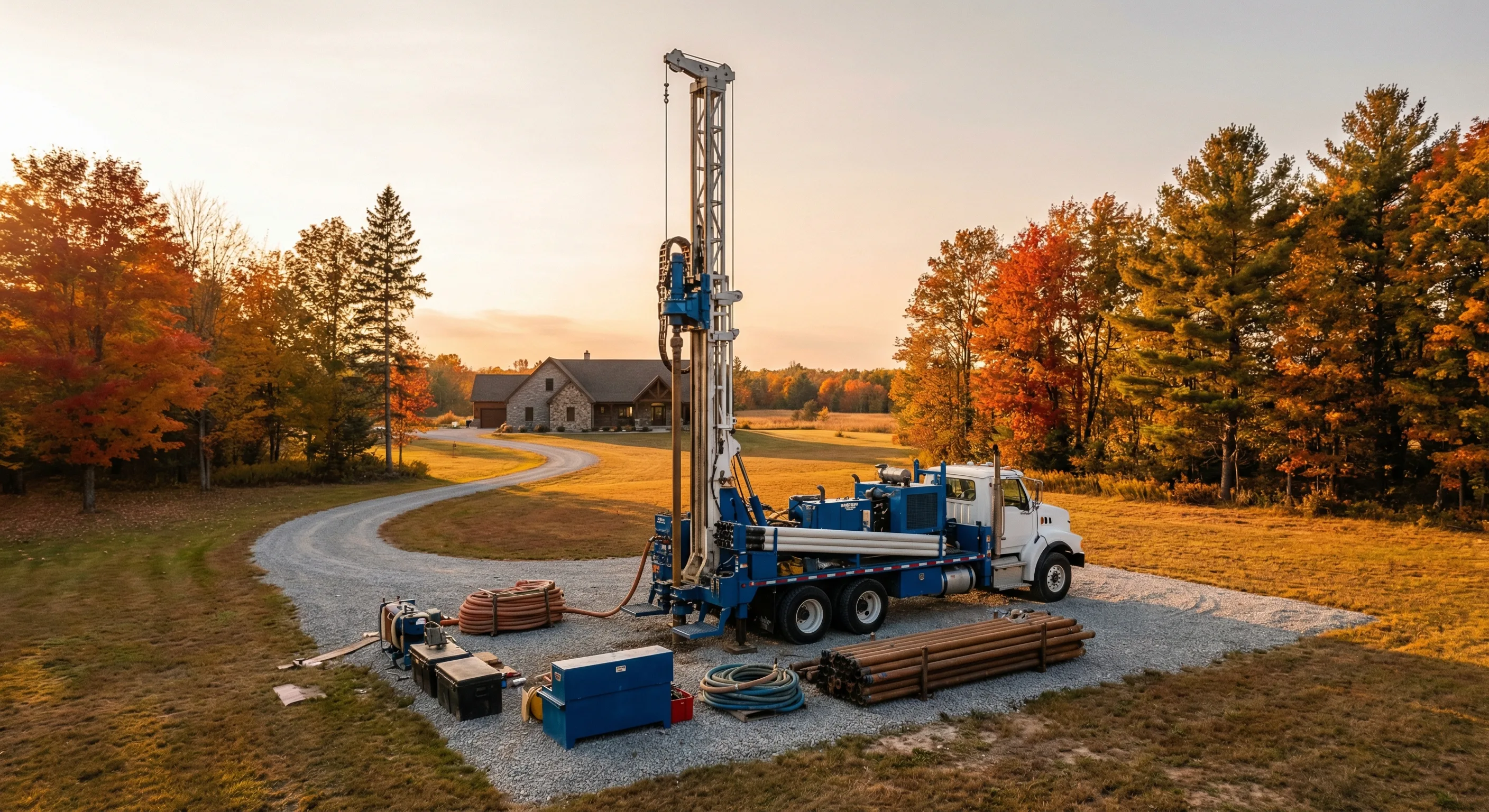
Well Installation & Completion in Melancthon Township
Professional well installation services for Melancthon Township homes, farms, and businesses.
Well installation in Melancthon Township must address both the escarpment plateau geology and the agricultural context that defines this Dufferin County municipality. The variable overburden — ranging from thin glacial cover over exposed bedrock to moderate-depth deposits in lower areas — determines whether the installation uses casing-in-rock techniques or standard overburden casing and grouting. In either case, the annular seal must be thorough because the intensive agricultural land use throughout Melancthon creates a surface environment where fertilizer-derived nitrate and other contaminants can migrate toward the groundwater. Isolating the well from the shallow zone is the primary defense against these agricultural influences. The casing is grouted with materials selected for the specific formation conditions, and the well is completed into a deep enough bedrock zone that natural clay layers and rock thickness provide additional protection. The pump setting must account for the deeper water tables characteristic of this high-elevation plateau, requiring appropriately sized equipment with adequate horsepower to lift water the greater distance. The pressure system is configured for the household demand, and treatment equipment is integrated where water testing indicates the need. Given the agricultural setting, we always test for nitrate and recommend ongoing annual monitoring. Our Melancthon installations are designed for properties that may be far from emergency services, so reliability and durability are engineered into every component. The well is built to serve for decades with minimal intervention.
Well Installation Services We Provide in Melancthon Township
Well Casing & Screening
Installation of steel or PVC well casing to the required depth, with stainless steel screens sized to match the aquifer formation. Proper casing protects the well from collapse and prevents surface water from entering the borehole. Screen slot sizes are selected based on the grain size of the aquifer material to maximize yield while preventing sand production.
Well Development
After casing and screening are installed, the well must be developed to remove drilling mud, fine sediment, and disturbed formation material from around the screen. We use surging, jetting, and controlled pumping techniques to clean the well bore and establish a natural gravel pack around the screen, maximizing long-term yield and water clarity.
Sealing & Grouting
Annular sealing with bentonite or cement grout fills the space between the well casing and the borehole wall. This seal prevents surface water, shallow groundwater, and contaminants from migrating down the outside of the casing into the aquifer. Ontario Regulation 903 specifies minimum sealing depths and material requirements that we follow rigorously on every installation.
Pitless Adapter Installation
A pitless adapter provides a sanitary, below-frost-line connection between the well casing and the horizontal water line running to your building. This eliminates the need for a well pit, which is no longer permitted under Ontario regulations due to contamination risk. We install pitless adapters at a depth of at least five feet to protect against freezing in Simcoe County winters.
Common Well Installation Issues in Melancthon Township
Protecting the well from agricultural surface contamination
Melancthon intensive farming generates significant quantities of fertilizer nitrogen, pesticides, and other agricultural chemicals that can migrate through the soil into the shallow groundwater. A well that is not properly sealed from this shallow zone will eventually show the effects through elevated nitrate or other contaminant levels.
Our Solution: We install casing to a depth that passes through the vulnerable shallow zone and into a protected bedrock aquifer beneath clay or dense rock layers. The grout seal is placed meticulously to prevent any vertical migration along the casing. We verify the seal integrity and test the completed well for agricultural parameters to confirm that the well is drawing from a protected source.
Deep water table requiring specialized pump equipment
The high elevation of the Melancthon plateau means the static water level in wells can be significantly deeper than in lowland areas. A pump sized for a typical 20-metre lift cannot handle a 50-metre lift — it will either fail to deliver adequate pressure or burn out from overwork.
Our Solution: We measure the exact static and pumping water levels during the pump test and select equipment rated for the total dynamic head at your specific well. This includes a pump with adequate horsepower, properly gauged wire to prevent voltage drop over the longer run, and drop pipe rated for the weight of the water column. Every component is matched to the actual conditions, not to average assumptions.
Variable overburden requiring different installation approaches across the township
Melancthon has areas of thin overburden with near-surface bedrock alongside areas with 15 to 20 metres of glacial deposits. The installation approach must change fundamentally between these zones, and properties near the boundary between them may encounter transitional conditions.
Our Solution: We base every installation decision on the actual drilling log from your property, not on general area assumptions. Thin-overburden properties receive casing-in-rock grouting, while deeper-overburden properties receive full casing and tremie-pipe grouting through the glacial materials. The approach is determined by what the drill actually encountered, ensuring the installation matches the real conditions.
Establish a Baseline Water Test When Your Melancthon Well Is New
The most valuable time to test your well water is immediately after installation when everything is new and properly sealed. This baseline establishes the starting chemistry including hardness, iron, nitrate, and other parameters. Save these results. In subsequent years, compare new test results to this baseline to identify any changes. A rising nitrate trend, for example, would prompt investigation before levels become a health concern. The baseline is your reference point for the life of the well.
Need Well Installation in Melancthon Township?
Call us for a free phone consultation or request a site visit. We're your local experts.
Well Installation in Melancthon Township: Frequently Asked Questions
How do you protect a Melancthon well from farm-related contamination?
What pump horsepower do Melancthon plateau wells typically need?
Should I test for nitrate annually on my Melancthon property?
How long does a well installation take in Melancthon Township?
Do you offer maintenance plans for Melancthon Township wells?
Other Services We Provide in Melancthon Township
Beyond well installation, we offer a full range of well and water services in Melancthon Township:
We Also Provide Well Installation in Nearby Areas
Serving communities across Simcoe County and Grey County from our home base in Stayner.
Serving Melancthon Township and Surrounding Areas
Ready to Get Started in Melancthon Township?
Contact our experienced team for a free consultation and estimate. Over 60 years of trusted service.