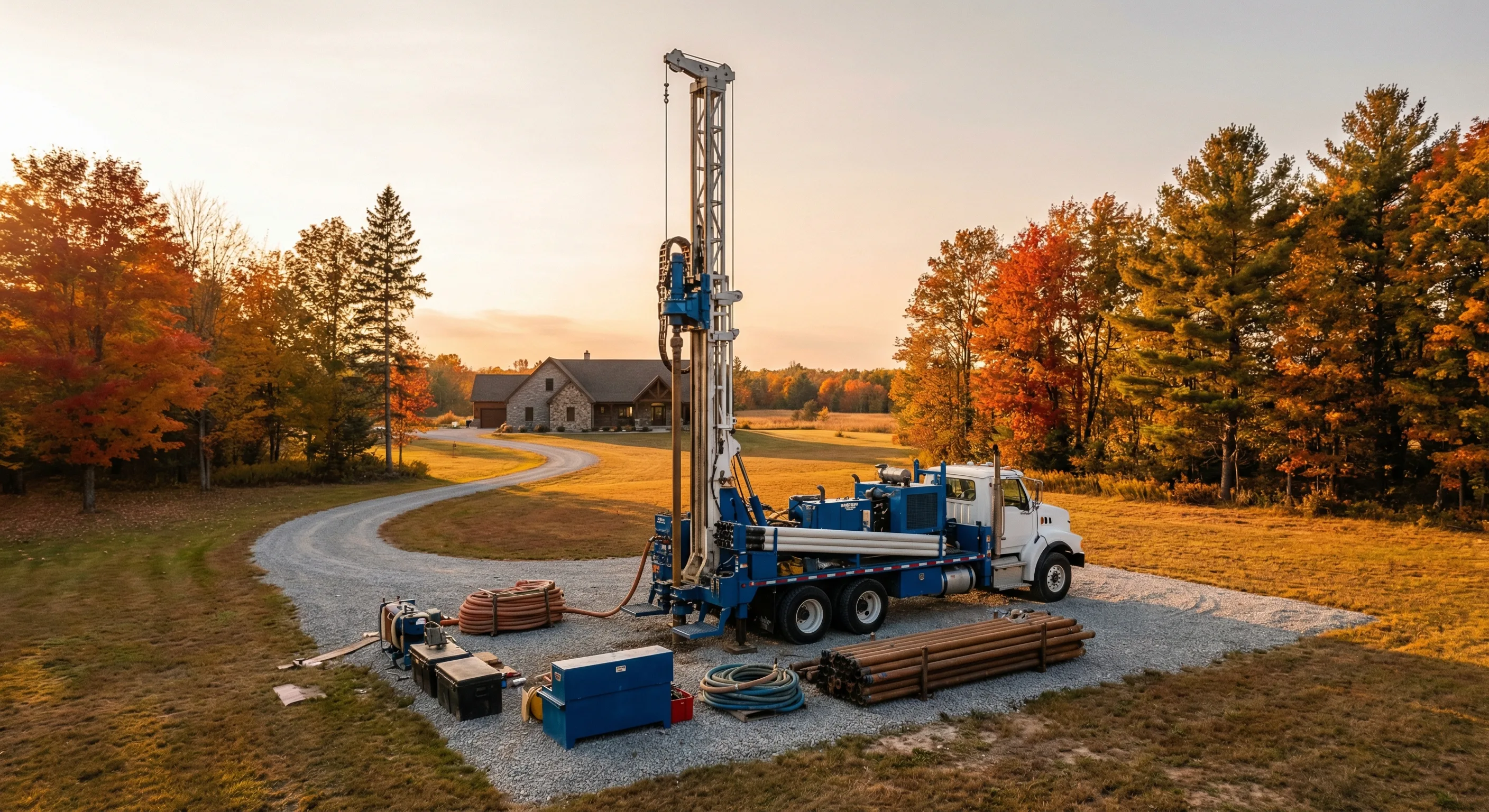
Well Installation & Completion in Clearview Township
Professional well installation services for Clearview Township homes, farms, and businesses.
Well installation in Clearview Township is defined by the need to properly seal well casing into shallow fractured limestone bedrock. With overburden often measuring just one to five metres, the casing-in-rock seal becomes the most critical element of the entire installation because it is the primary — and in some cases the only — barrier between the surface environment and the drinking water aquifer. The fractured limestone bedrock that underlies Clearview is an excellent aquifer when properly accessed, but those same fractures near the surface can channel contamination into the groundwater if the well seal is not executed correctly. Our installation protocol for Clearview begins with advancing the casing through the thin overburden and into a competent section of bedrock below the weathered and fractured surface zone. Neat cement grout is then placed from the bottom of the annular space upward, filling every void between the casing and the rock. We verify the fill by tracking grout volume against the calculated annular capacity. Once the seal is confirmed, the well is developed by pumping to clear drilling debris from the bedrock fractures that supply water. The pump is set at a depth determined by the pump test results, with adequate submergence below the anticipated drawdown level. Given the vulnerability of shallow bedrock aquifers to surface contamination, we pay particular attention to the wellhead completion — the cap, the surface grading, and the above-grade casing extension all contribute to keeping contaminants out of your Clearview well.
Well Installation Services We Provide in Clearview Township
Well Casing & Screening
Installation of steel or PVC well casing to the required depth, with stainless steel screens sized to match the aquifer formation. Proper casing protects the well from collapse and prevents surface water from entering the borehole. Screen slot sizes are selected based on the grain size of the aquifer material to maximize yield while preventing sand production.
Well Development
After casing and screening are installed, the well must be developed to remove drilling mud, fine sediment, and disturbed formation material from around the screen. We use surging, jetting, and controlled pumping techniques to clean the well bore and establish a natural gravel pack around the screen, maximizing long-term yield and water clarity.
Sealing & Grouting
Annular sealing with bentonite or cement grout fills the space between the well casing and the borehole wall. This seal prevents surface water, shallow groundwater, and contaminants from migrating down the outside of the casing into the aquifer. Ontario Regulation 903 specifies minimum sealing depths and material requirements that we follow rigorously on every installation.
Pitless Adapter Installation
A pitless adapter provides a sanitary, below-frost-line connection between the well casing and the horizontal water line running to your building. This eliminates the need for a well pit, which is no longer permitted under Ontario regulations due to contamination risk. We install pitless adapters at a depth of at least five feet to protect against freezing in Simcoe County winters.
Common Well Installation Issues in Clearview Township
Finding competent rock for casing seat in highly fractured surface bedrock
The upper portion of the limestone bedrock in Clearview is often weathered and fractured from freeze-thaw cycles and surface processes. Seating the casing in this fractured zone is unreliable because the grout may flow through the fractures rather than filling the annular space, and the rock may not provide a stable anchor for the casing.
Our Solution: We advance the casing past the fractured surface zone into solid, competent bedrock. This may mean going a metre or two deeper than the minimum, but the result is a casing seat in rock that holds the grout seal reliably. We verify rock competence by observing drill performance and the quality of the rock cuttings before committing the casing seat.
Surface water ingress through wellhead area in thin-overburden terrain
When overburden is minimal, the wellhead area is more vulnerable to surface water pooling around the casing during rain or snowmelt. If the above-grade completion is not properly configured, this water can find pathways down alongside the casing and compromise the well water quality.
Our Solution: We finish every Clearview wellhead with the casing extending a minimum of 30 centimetres above grade, fitted with a vermin-proof, watertight well cap. The surrounding grade is sloped away from the casing to prevent ponding. Where necessary, we add a concrete pad or wellhead protection to ensure positive drainage away from the well. These measures are especially important in Clearview thin-overburden conditions.
Well development challenges in tight limestone fractures
Some Clearview wells produce from relatively tight fractures in the limestone that can become clogged with drilling debris during construction. If the well is not properly developed, this debris restricts flow and reduces the effective yield below what the natural fractures could provide.
Our Solution: We use aggressive well development techniques including air-lifting, surging, and extended pumping to dislodge and remove fine particles from the fracture network around the borehole. Development continues until the water is clear and the specific capacity stabilizes, indicating that the fractures are clean and contributing their full potential flow. This step is essential for maximizing the productivity of Clearview bedrock wells.
Invest in Wellhead Protection for Your Clearview Property
Given the thin overburden throughout Clearview Township, your wellhead deserves extra protection. A concrete well pad around the casing prevents surface water from pooling near the well. Keeping the casing extension well above grade prevents accidental damage from mowing or landscaping. These simple physical measures complement the casing seal below ground and together provide comprehensive protection for your shallow bedrock well.
Need Well Installation in Clearview Township?
Call us for a free phone consultation or request a site visit. We're your local experts.
Well Installation in Clearview Township: Frequently Asked Questions
Why is the casing seal so important in Clearview Township wells?
Do Clearview Township wells need a well screen?
How deep should the pump be set in a Clearview bedrock well?
What well development do you perform on Clearview wells?
Should I install UV treatment on my new Clearview well?
Other Services We Provide in Clearview Township
Beyond well installation, we offer a full range of well and water services in Clearview Township:
We Also Provide Well Installation in Nearby Areas
Serving communities across Simcoe County and Grey County from our home base in Stayner.
Serving Clearview Township and Surrounding Areas
Ready to Get Started in Clearview Township?
Contact our experienced team for a free consultation and estimate. Over 60 years of trusted service.