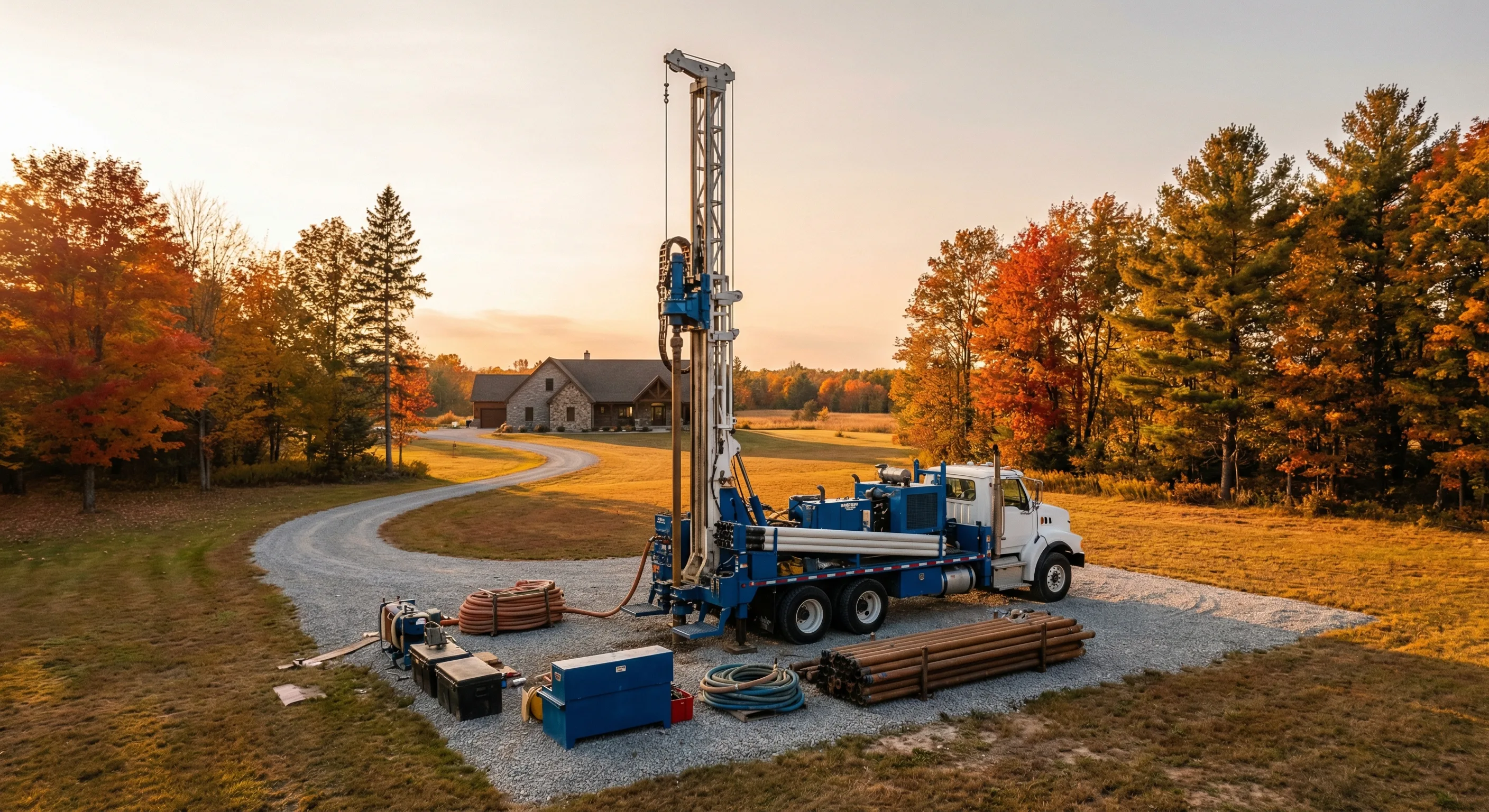
Well Installation & Completion in Bradford West Gwillimbury
Professional well installation services for Bradford West Gwillimbury homes, farms, and businesses.
Well installation in Bradford West Gwillimbury demands extra attention to isolating the well from the shallow water table and organic soils associated with the Holland Marsh. The completion strategy centres on ensuring that the casing extends deep enough and is grouted thoroughly enough to prevent any shallow, potentially contaminated groundwater from entering the well. Near the marsh, the first several metres of subsurface may consist of peat, organic muck, and saturated alluvial material that must be completely sealed off from the well interior. The casing passes through these soft, unstable layers and is seated into stable mineral soil or bedrock below, with the annular space grouted from the bottom up to create a continuous, impermeable barrier. The grouting in this zone is particularly important because the organic soils can introduce unpleasant taste, colour, and odour compounds into the groundwater, and shallow agricultural infiltration carries potential nitrate contamination. Deeper aquifers — whether in confined sand and gravel layers beneath the clay or in fractured bedrock — provide water that is naturally protected from these surface influences when the well is properly sealed. The pump and pressure system are configured based on the specific aquifer conditions and household demand. For properties with elevated nitrate or other agricultural parameters in the water, we can integrate treatment systems including reverse osmosis into the initial installation. Every Bradford West Gwillimbury well is disinfected and tested before handoff.
Well Installation Services We Provide in Bradford West Gwillimbury
Well Casing & Screening
Installation of steel or PVC well casing to the required depth, with stainless steel screens sized to match the aquifer formation. Proper casing protects the well from collapse and prevents surface water from entering the borehole. Screen slot sizes are selected based on the grain size of the aquifer material to maximize yield while preventing sand production.
Well Development
After casing and screening are installed, the well must be developed to remove drilling mud, fine sediment, and disturbed formation material from around the screen. We use surging, jetting, and controlled pumping techniques to clean the well bore and establish a natural gravel pack around the screen, maximizing long-term yield and water clarity.
Sealing & Grouting
Annular sealing with bentonite or cement grout fills the space between the well casing and the borehole wall. This seal prevents surface water, shallow groundwater, and contaminants from migrating down the outside of the casing into the aquifer. Ontario Regulation 903 specifies minimum sealing depths and material requirements that we follow rigorously on every installation.
Pitless Adapter Installation
A pitless adapter provides a sanitary, below-frost-line connection between the well casing and the horizontal water line running to your building. This eliminates the need for a well pit, which is no longer permitted under Ontario regulations due to contamination risk. We install pitless adapters at a depth of at least five feet to protect against freezing in Simcoe County winters.
Common Well Installation Issues in Bradford West Gwillimbury
Sealing through soft organic soils near the Holland Marsh
Organic peat and muck deposits near the marsh provide no structural support for well casing and can compress or shift over time. If the grout seal in this zone is disrupted, the organic-influenced shallow groundwater can seep into the well, introducing taste, odour, and potential contamination issues.
Our Solution: We case through the organic layer and seat the casing in stable material below before grouting. The grout mix is formulated to remain intact in wet, organic environments without degrading. We fill the annular space completely from bottom to top, paying particular attention to the organic zone where voids are most likely to form. The result is a permanent seal that isolates the well from all marsh-influenced water.
Nitrate contamination risk from agricultural activity
The Holland Marsh is one of Ontario most intensive agricultural areas. Fertilizer nitrogen can convert to nitrate and migrate through the shallow soil into the groundwater. Wells that are not properly sealed from the shallow zone may show elevated nitrate, which poses health risks particularly for infants.
Our Solution: We construct every Bradford West Gwillimbury well with a casing and grout seal designed to completely isolate the production aquifer from the shallow agricultural zone. The production aquifer is selected specifically for its natural protection by overlying clay layers. Post-installation water testing always includes nitrate. If levels are still elevated despite proper construction, point-of-use reverse osmosis treatment effectively reduces nitrate below the health standard.
Shallow water table interfering with surface construction activities
The high water table near the Holland Marsh means that excavation for the water line trench and wellhead area can encounter water almost immediately. This water fills the trench, making it difficult to install piping at the proper depth and grade, and can destabilize the soil around the wellhead.
Our Solution: We use dewatering techniques during trench excavation to manage the shallow groundwater. The water line is installed at proper depth and grade despite the wet conditions, and the trench is backfilled carefully with selected material that drains well. The wellhead area is graded with a raised pad to elevate it above the surrounding saturated grade, providing positive drainage away from the casing.
Prioritize Deep Casing and Complete Grouting for Holland Marsh Area Wells
If your Bradford West Gwillimbury property is near the Holland Marsh, do not accept shortcuts on casing depth or grouting. The organic soils and agricultural activity make proper sealing from the shallow zone more important here than almost anywhere else in our service area. A well that skimps on casing depth or uses incomplete grouting may produce water that tastes fine initially but gradually shows influence from the shallow marsh-affected zone. Invest in complete isolation from the start.
Need Well Installation in Bradford West Gwillimbury?
Call us for a free phone consultation or request a site visit. We're your local experts.
Well Installation in Bradford West Gwillimbury: Frequently Asked Questions
How deep must the casing go to protect a well near the Holland Marsh?
Will my Bradford West Gwillimbury well water smell or taste like the marsh?
Do I need a reverse osmosis system for my Bradford well?
How is the wellhead finished on a property with a high water table?
Can you install the well and treatment system together in Bradford West Gwillimbury?
Other Services We Provide in Bradford West Gwillimbury
Beyond well installation, we offer a full range of well and water services in Bradford West Gwillimbury:
We Also Provide Well Installation in Nearby Areas
Serving communities across Simcoe County and Grey County from our home base in Stayner.
Serving Bradford West Gwillimbury and Surrounding Areas
Ready to Get Started in Bradford West Gwillimbury?
Contact our experienced team for a free consultation and estimate. Over 60 years of trusted service.