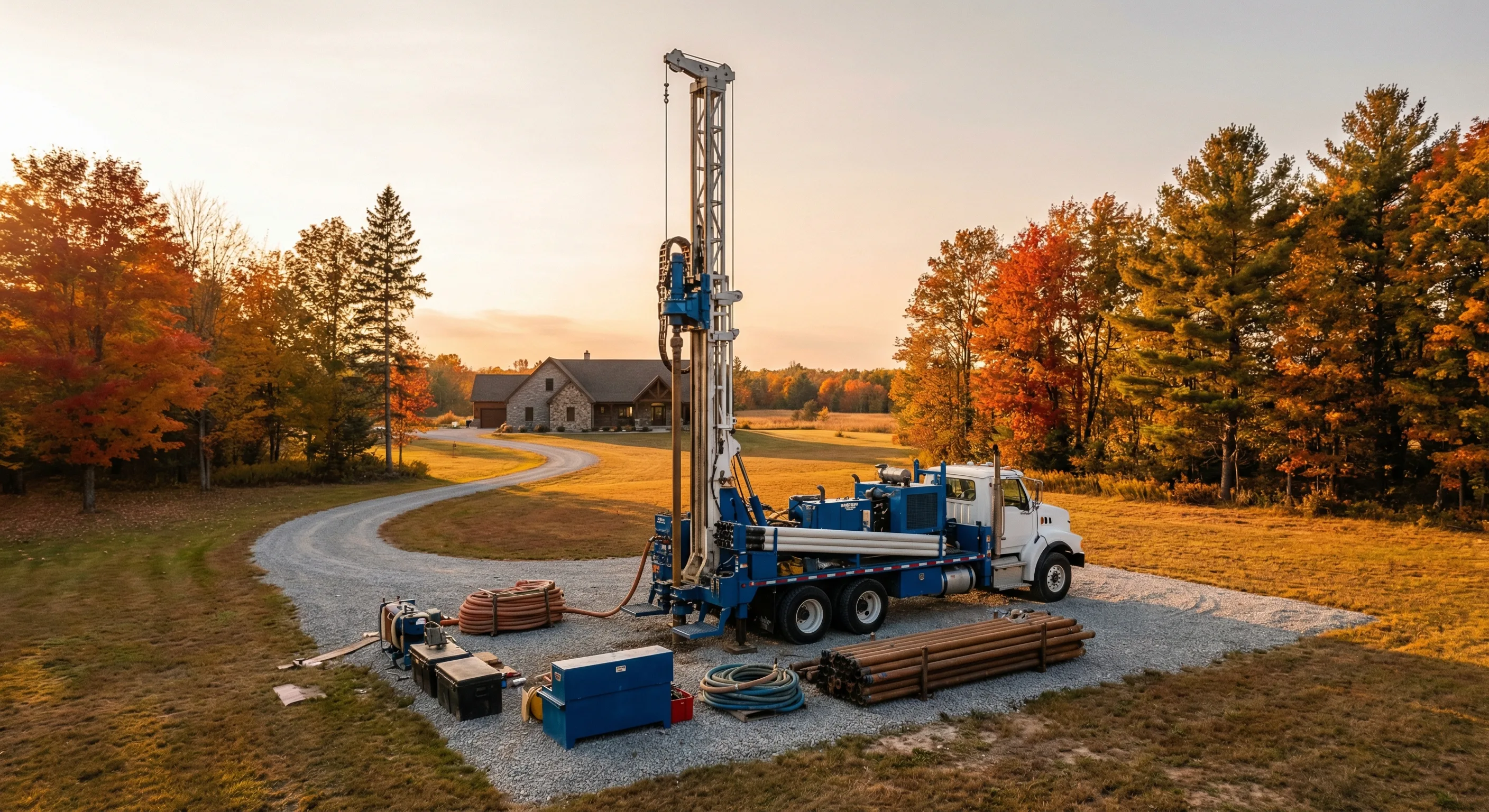
Well Drilling Services in Wasaga Beach
Professional well drilling services for Wasaga Beach homes, farms, and businesses.
Drilling a well in Wasaga Beach requires an experienced crew that understands the thick blanket of lacustrine sand deposited by glacial Lake Algonquin thousands of years ago. This sandy overburden can extend 30 metres or more before reaching the underlying Black River and Trenton Group bedrock of limestone and dolostone. The buried Laurentian River valley, an ancient pre-glacial channel running beneath portions of the community, creates significant variability in drilling conditions from one property to the next. A well drilled on Beach Area 2 may encounter very different aquifer conditions than one drilled a few hundred metres away near the 45th Street corridor. Our drilling teams begin every Wasaga Beach project with a thorough review of nearby well records from the Ontario Well Record database and a site assessment to identify the most promising drilling location. We use rotary drilling methods suited to the sandy overburden and switch to air-hammer techniques when we encounter bedrock. Many Wasaga Beach wells produce water from fractured bedrock zones at depths between 30 and 75 metres, though properties situated above the buried Laurentian valley sometimes tap productive gravel aquifers at shallower depths. Iron and manganese are prevalent in the local groundwater, so we always test the raw water before the well is finalized to help homeowners plan for any necessary treatment.
Well Drilling Services We Provide in Wasaga Beach
Residential Well Drilling
New water well drilling for homes and cottages across Simcoe County. We work with builders and homeowners to site wells properly, considering setback distances from septic systems, property boundaries, and potential contamination sources as required by Ontario Regulation 903. Our residential wells typically range from 40 to 200 feet depending on local geology.
Commercial & Industrial Well Drilling
High-capacity well drilling for businesses, farms, campgrounds, golf courses, and industrial applications. Commercial wells require careful hydrogeological assessment to ensure sustainable yield without impacting neighbouring water supplies. We coordinate with hydrogeologists and the Ministry of the Environment for Permit to Take Water (PTTW) applications when required.
Monitoring Well Installation
Environmental monitoring wells for groundwater quality assessment, contamination investigations, and site remediation projects. We construct monitoring wells to MOE specifications using appropriate materials and screen intervals to accurately represent groundwater conditions at the target depth zone within the aquifer.
Common Well Drilling Issues in Wasaga Beach
Sand infiltration from poorly screened overburden wells
The thick lacustrine sand deposits in Wasaga Beach mean that wells completed in the overburden are highly susceptible to sand entry if the screen slot size is not precisely matched to the grain size of the surrounding formation. Sand-laden water wears down pump components and clogs plumbing fixtures over time.
Our Solution: We perform a grain-size analysis of drill cuttings to select the correct screen slot size and install a properly sized sand screen with a gravel pack where needed. This prevents sand migration into the well while maintaining strong water flow.
Unpredictable drilling depth due to the buried Laurentian River valley
The ancient buried valley running beneath Wasaga Beach creates dramatic differences in bedrock depth over short distances. A neighbour may have a 25-metre well while your property requires drilling to 70 metres or more to reach the same aquifer.
Our Solution: We research nearby well records and use our decades of local experience to provide realistic depth estimates before drilling begins. Our transparent pricing structure means you understand potential costs upfront, and we communicate in real-time as the drill progresses through each geological layer.
Elevated iron and manganese in groundwater
Groundwater passing through the sandy glacial deposits in Wasaga Beach often picks up dissolved iron and manganese. These minerals cause orange or black staining on fixtures, unpleasant metallic taste, and can promote bacterial growth in the well and plumbing system.
Our Solution: After drilling is complete, we collect water samples and test for iron, manganese, and other parameters. Based on the results, we can recommend and install appropriate treatment systems such as iron filters or oxidation units to ensure clean, clear water from your new well.
Seasonal water demand spikes overwhelming undersized wells
Wasaga Beach sees its population multiply during summer months as seasonal residents and tourists arrive. Wells that were drilled with minimal yield may struggle to keep up with increased household water use during peak season, leading to temporary dry spells or reduced pressure.
Our Solution: We size every new Wasaga Beach well for peak-season demand, not just average use. Where yield is limited, we recommend pressure tanks with adequate storage capacity and flow-control systems that prevent the pump from outpacing the aquifer recovery rate.
Plan Your Wasaga Beach Well Drilling for the Off-Season
Scheduling your well drilling project between October and May can mean shorter wait times and potentially faster mobilization of our drilling rig to your Wasaga Beach property. Summer traffic congestion along the beach corridors can slow equipment transport, and many seasonal homeowners prefer to have their wells ready before the summer rush. Off-season drilling also lets us complete water testing and any necessary treatment installation before you need peak water supply.
Need Well Drilling in Wasaga Beach?
Call us for a free phone consultation or request a site visit. We're your local experts.
Well Drilling in Wasaga Beach: Frequently Asked Questions
How deep do most wells need to be drilled in Wasaga Beach?
Will my new Wasaga Beach well have sand problems?
Is drilling through sand different from drilling through rock in Wasaga Beach?
What is the buried Laurentian River valley and how does it affect my well?
How long does it take to drill a well in Wasaga Beach?
Do I need a permit to drill a well in Wasaga Beach?
Other Services We Provide in Wasaga Beach
Beyond well drilling, we offer a full range of well and water services in Wasaga Beach:
We Also Provide Well Drilling in Nearby Areas
Serving communities across Simcoe County and Grey County from our home base in Stayner.
Serving Wasaga Beach and Surrounding Areas
Ready to Get Started in Wasaga Beach?
Contact our experienced team for a free consultation and estimate. Over 60 years of trusted service.