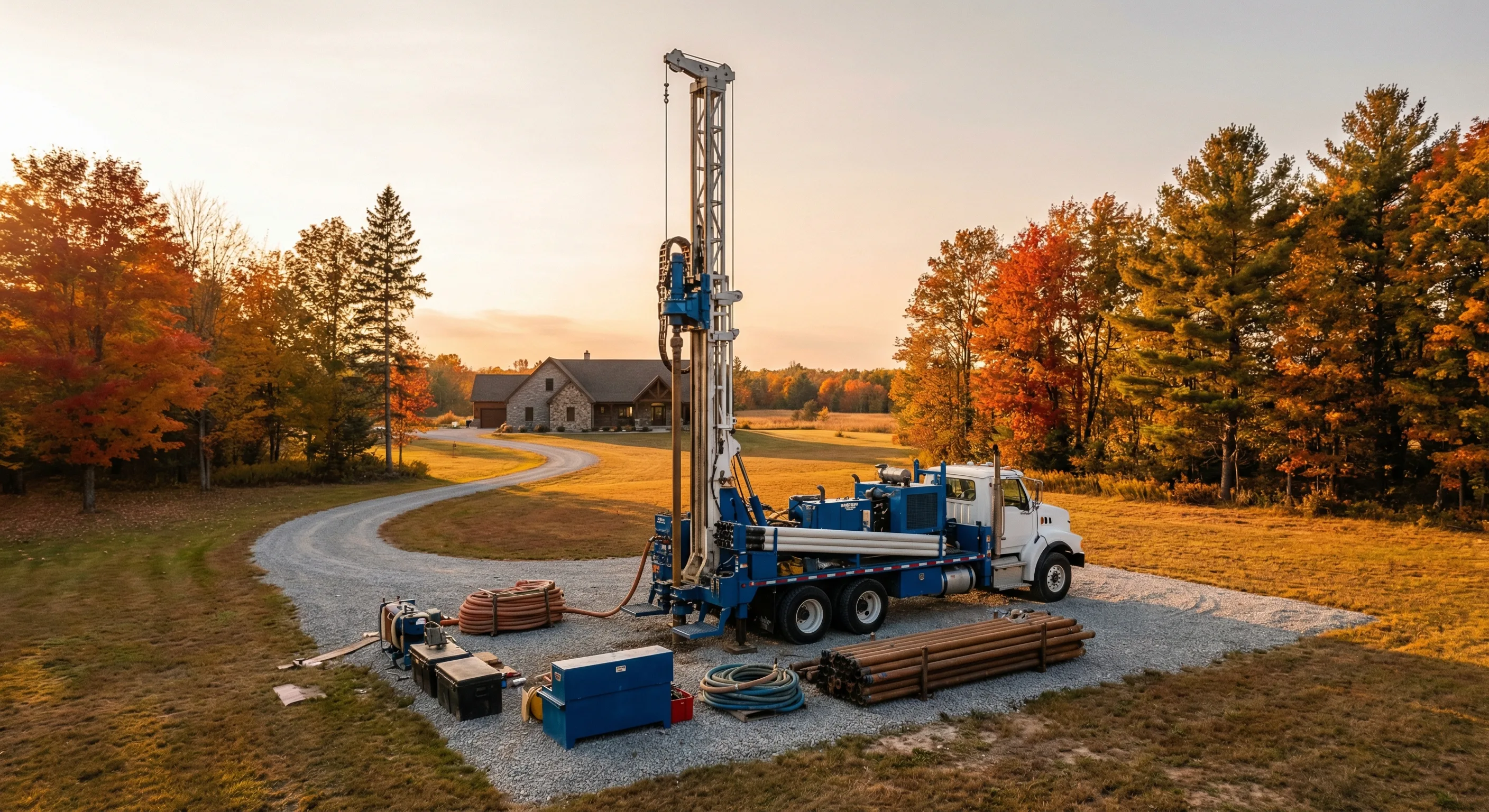
Well Drilling Services in Blue Mountains
Professional well drilling services for The Blue Mountains homes, farms, and businesses.
The Town of The Blue Mountains presents some of the most geologically diverse drilling conditions in our entire service area. The Niagara Escarpment runs through this municipality, creating dramatic variations in bedrock depth and type depending on whether your property sits atop the escarpment, along its face, or on the lowlands below. Properties on the upper escarpment often encounter shallow Paleozoic limestone and dolostone bedrock with thin overburden, meaning bedrock may be reached within just a few metres of the surface. In these areas, well yield depends entirely on intersecting fracture zones within the rock. Along the escarpment face and at its base near the Craigleith and Camperdown areas, the geology transitions and overburden thickness increases. The resort and ski-hill developments around the Blue Mountain Village area have driven significant demand for well drilling in recent decades, and our crews have developed specialized knowledge of the fractured aquifer systems that serve these properties. Water quality in Blue Mountains wells varies: escarpment wells often produce clear, hard water from limestone fractures, while some areas experience hydrogen sulphide issues where the water has contacted specific shale formations. We assess each property individually and draw on our extensive record of drilling throughout this municipality to provide accurate project expectations.
Well Drilling Services We Provide in The Blue Mountains
Residential Well Drilling
New water well drilling for homes and cottages across Simcoe County. We work with builders and homeowners to site wells properly, considering setback distances from septic systems, property boundaries, and potential contamination sources as required by Ontario Regulation 903. Our residential wells typically range from 40 to 200 feet depending on local geology.
Commercial & Industrial Well Drilling
High-capacity well drilling for businesses, farms, campgrounds, golf courses, and industrial applications. Commercial wells require careful hydrogeological assessment to ensure sustainable yield without impacting neighbouring water supplies. We coordinate with hydrogeologists and the Ministry of the Environment for Permit to Take Water (PTTW) applications when required.
Monitoring Well Installation
Environmental monitoring wells for groundwater quality assessment, contamination investigations, and site remediation projects. We construct monitoring wells to MOE specifications using appropriate materials and screen intervals to accurately represent groundwater conditions at the target depth zone within the aquifer.
Common Well Drilling Issues in The Blue Mountains
Low yield in massive unfractured escarpment bedrock
Some areas of the Blue Mountains Escarpment have thick sections of unfractured limestone or dolostone that transmit very little water. A borehole drilled through solid, unfractured bedrock may produce inadequate flow even at significant depth. This is particularly common on the upper escarpment plateau.
Our Solution: Our drillers read the formation carefully as they advance through the bedrock, watching for changes in air pressure and water return that indicate productive fracture zones. If one location proves unproductive, we can advise on repositioning the well to target known fracture systems. We also use extended pump testing to confirm yield before finalizing the well.
Shallow bedrock limiting well construction options
Many Blue Mountains properties have bedrock at or near the surface with minimal overburden. This makes it difficult to install the required length of surface casing to protect the well from surface water contamination and can complicate finding a drilling site that meets regulatory setback requirements.
Our Solution: We use specialized casing-in-rock techniques to properly seal wells in shallow bedrock conditions. Our crews are experienced at grouting casing directly into bedrock to create a watertight seal that meets Ontario Regulation 903 requirements. Careful site selection ensures all setbacks are maintained even on challenging properties.
Hydrogen sulphide odour from certain bedrock formations
Some wells in the Blue Mountains encounter shale or organic-rich layers within the bedrock sequence that release hydrogen sulphide gas into the groundwater. This produces a distinctive rotten-egg smell that makes the water unpleasant to use despite being otherwise safe.
Our Solution: We test for hydrogen sulphide during the water analysis phase following drilling. Treatment options include aeration systems, activated carbon filtration, or oxidation units depending on the concentration. Identifying the issue during drilling allows us to recommend the most effective and economical treatment from the start.
Check Escarpment Zoning Before Planning Your Blue Mountains Well
Parts of The Blue Mountains fall within the Niagara Escarpment Plan area, which may impose additional restrictions on development including well drilling. Before finalizing your well location, confirm with the Niagara Escarpment Commission whether your property requires a development permit. We can help you navigate this process and ensure your well placement satisfies both geological and regulatory requirements. Starting this early avoids delays once drilling equipment is scheduled.
Need Well Drilling in The Blue Mountains?
Call us for a free phone consultation or request a site visit. We're your local experts.
Well Drilling in The Blue Mountains: Frequently Asked Questions
How does the Niagara Escarpment affect well drilling in Blue Mountains?
What depth should I expect for a well near the Blue Mountain ski area?
Is well water in Blue Mountains safe to drink without treatment?
Can you drill a well on a steep Blue Mountains property?
How much water does a typical Blue Mountains well produce?
Do Blue Mountains cottage properties need different wells than year-round homes?
Other Services We Provide in The Blue Mountains
Beyond well drilling, we offer a full range of well and water services in The Blue Mountains:
We Also Provide Well Drilling in Nearby Areas
Serving communities across Simcoe County and Grey County from our home base in Stayner.
Serving The Blue Mountains and Surrounding Areas
Ready to Get Started in The Blue Mountains?
Contact our experienced team for a free consultation and estimate. Over 60 years of trusted service.