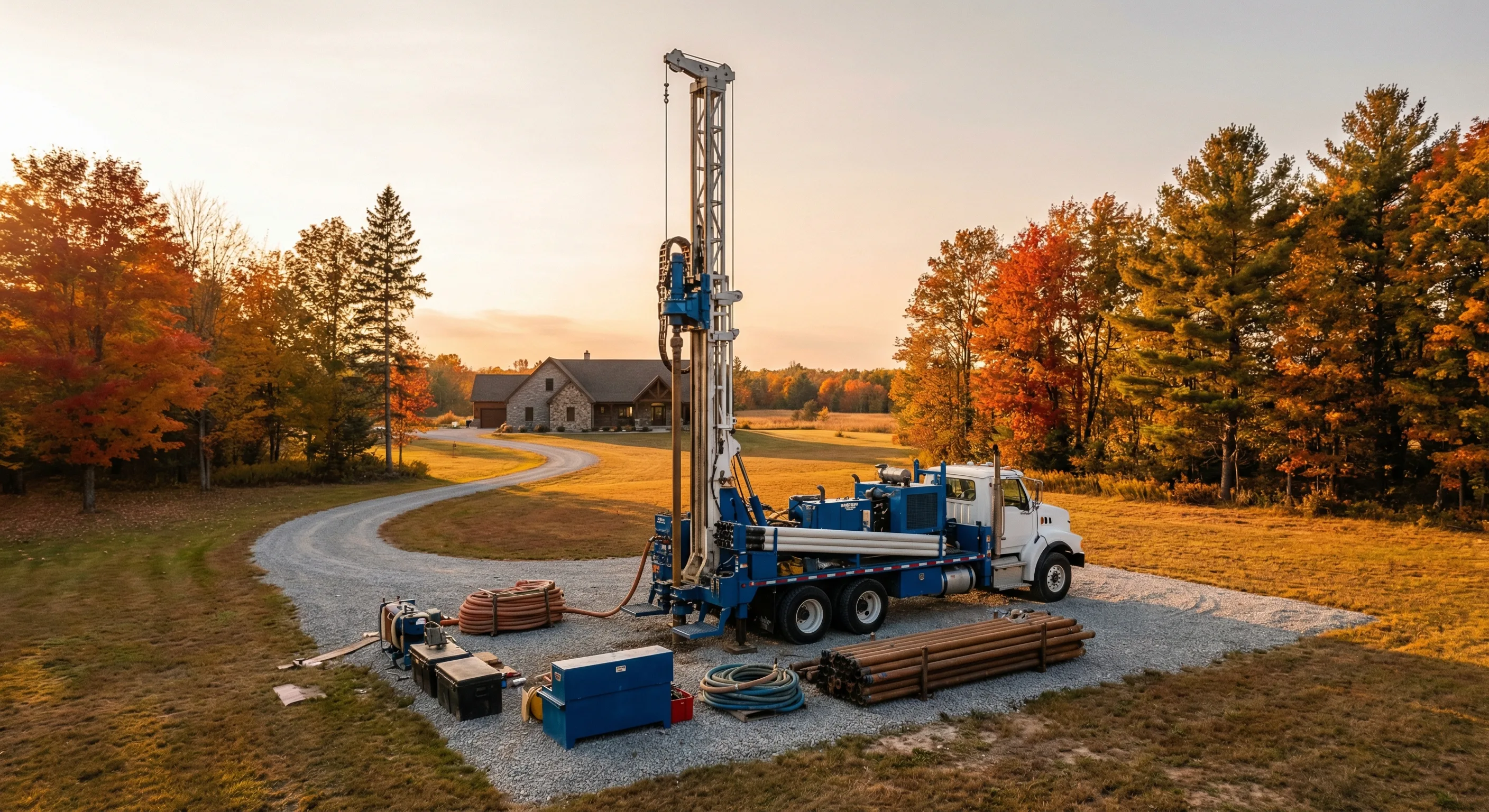
Well Maintenance & Repair Services
Extend the life of your well with expert maintenance.
Water wells are long-term investments that, with proper maintenance, can provide reliable service for 30 to 50 years or more. However, wells do not maintain themselves. Over time, mineral deposits accumulate on screens and in the formation around the well bore, biological growth colonizes the intake zone, casings corrode, and changing water tables can reduce yield. Mighton's Well Services provides comprehensive well maintenance and repair services across Simcoe County to keep your water supply performing at its best.
Many homeowners in our service area are dealing with wells that were drilled decades ago — some dating back to the 1960s and 1970s when construction standards differed from today's Ontario Regulation 903 requirements. These aging wells often show symptoms like gradually declining yield, increasing sediment, bacterial contamination, or changes in water quality. The good news is that many of these problems can be addressed through proper rehabilitation without the cost of drilling a new well. Our licensed technicians use downhole video inspection to diagnose issues accurately before recommending solutions.
The geological conditions in Simcoe County create specific maintenance challenges. Wells drawing from the limestone and dolostone aquifers in the central and eastern parts of the county are prone to calcium carbonate encrustation on screens and in fractures. Iron bacteria — a naturally occurring organism that thrives in the iron-rich groundwater common throughout the region — can form thick, slimy deposits that progressively block well screens and reduce flow. Seasonal fluctuations also play a role: the spring freshet raises water tables and can introduce surface water into marginally sealed wells, while late summer drought conditions stress shallow aquifers. Regular inspection and proactive maintenance prevent these issues from becoming expensive emergencies.
Our well maintenance methodology is systematic and thorough. Every service visit begins with a review of the well record and any previous maintenance history. We measure the static water level and compare it to historical records to identify long-term trends in aquifer performance. The centrepiece of our diagnostic process is a downhole video inspection using a specialized submersible camera that travels the full length of the well, providing a real-time view of the casing interior, screen condition, and any obstructions or deposits. This camera survey eliminates guesswork — we can see exactly where corrosion has developed, how much encrustation has accumulated on the screen, and whether sediment has built up at the bottom of the well. Based on these findings, we develop a targeted treatment plan that may include chemical rehabilitation using acid or biocide solutions, mechanical brushing to break up stubborn deposits, high-volume pumping to flush loosened material from the well bore, and disinfection to restore bacteriological safety.
Seasonal awareness is essential for effective well maintenance in our climate. Spring is the most critical time to monitor well integrity, as the combination of snowmelt, heavy rain, and rising water tables puts maximum stress on well seals and surface protection. If your well cap sits in a low spot that floods during spring thaw, or if the ground around the casing has settled and no longer slopes away properly, contaminated surface water can find its way in. Summer and early fall are ideal times for planned rehabilitation work — the lower water tables make it easier to access the full well bore, warmer temperatures improve the effectiveness of chemical treatments, and you are not facing the urgency of an impending winter freeze. Late fall is a smart time for a preventive checkup: ensuring the pitless adapter is secure, the well cap seal is intact, and the pressure system is ready for the demands of cold weather when any failure becomes more urgent and more difficult to repair.
Simcoe County's geological diversity means that maintenance needs differ significantly from one area to another. Wells in the sandy formations around Wasaga Beach and along the Nottawasaga River tend to experience sand infiltration issues as screens age and corrode, gradually allowing fine particles into the water system that wear down pumps and clog fixtures. In Springwater Township, where heavy clay soils dominate the overburden, wells are less prone to sand problems but more susceptible to surface water infiltration if the clay around the casing shrinks during dry periods and creates pathways along the outside of the casing. The fractured bedrock wells in Clearview and the Blue Mountains are particularly vulnerable to mineral encrustation in the fractures that supply water to the well — once these fractures become partially blocked, well yield drops noticeably and chemical rehabilitation is needed to dissolve the deposits and restore flow. In the Barrie area, where glacial till deposits create complex layered aquifer systems, maintenance must account for the possibility of cross-contamination between aquifer zones if the annular seal has deteriorated over time.
Homeowners should know that well maintenance is not something to think about only when a problem appears. By the time you notice reduced pressure, discoloured water, or a change in taste, the underlying issue has often been developing for months or years. Proactive maintenance — a camera inspection and water test every five years, annual bacteria testing, and prompt attention to any change in well performance — is far less expensive than emergency rehabilitation or well replacement. Many homeowners are surprised to learn that a well rehabilitation costing a few thousand dollars can restore their well to near-original performance and add decades of service life. We also encourage property owners to keep their well record in a safe, accessible place and to maintain a log of any service performed on the well. This history is invaluable for diagnosing future issues and is required information if you ever sell the property. Mighton's Well Services keeps records of all work we perform and can provide copies at any time.
What's Included
Well Rehabilitation
Restoration of lost well capacity through chemical treatment, mechanical cleaning, and redevelopment. We use targeted chemical solutions to dissolve mineral encrustation and iron bacteria deposits, followed by aggressive surging and pumping to remove loosened material from the well bore. Many wells recover 80 to 100 percent of their original yield through proper rehabilitation.
Well Cleaning
Routine cleaning removes accumulated sediment, scale, and biological growth from the well bore before they cause serious performance decline. We recommend well cleaning every five to ten years for most Simcoe County wells, with more frequent service for wells in areas with heavy iron bacteria or mineral encrustation. Regular cleaning extends well life and maintains water quality.
Casing Repair
Steel well casings can develop corrosion holes, split joints, or cracks over time, particularly in aggressive groundwater chemistry. We assess casing condition through downhole video inspection and repair using casing liners, patching sleeves, or by installing a smaller diameter casing inside the damaged section. Casing repair restores the sanitary seal and structural integrity of the well.
Screen Replacement
Well screens that have corroded through, collapsed, or become so encrusted that cleaning is no longer effective need to be replaced. We remove the failed screen and install a new stainless steel screen matched to the aquifer formation. This can restore a well to near-original performance and is far less costly than drilling a new well.
Well Deepening
When water tables drop or demand exceeds original well capacity, deepening an existing well into a lower aquifer can provide the additional yield needed. We assess the geological potential below the current well bottom and, where conditions are favourable, drill deeper to access a more productive water-bearing zone. This is often more cost-effective than drilling an entirely new well.
How It Works
Inspection & Diagnosis
We begin with a thorough assessment including review of the well record, water quality testing, static water level measurement, and downhole video inspection. The camera survey reveals the condition of the casing, screen, and well bore, allowing us to pinpoint the exact cause of performance issues.
Treatment Plan
Based on the inspection findings, we develop a targeted treatment plan and provide a clear estimate. We explain what we found, what needs to be done, and what results you can expect. No work proceeds until you approve the plan.
Rehabilitation Work
We perform the recommended repairs — whether chemical treatment for encrustation, mechanical cleaning of the well bore, casing repair, screen replacement, or a combination of methods. The pump is pulled to allow full access to the well.
Redevelopment & Testing
After rehabilitation, we redevelop the well by pumping to remove all treatment chemicals and loosened material. We measure the post-treatment yield and compare it to pre-treatment performance. The well is disinfected, and a water sample is submitted for testing before returning the system to service.
Common Problems We Solve
Iron Bacteria Fouling
Iron bacteria are naturally occurring organisms that thrive in the iron-rich groundwater common across Simcoe County. They form rust-coloured, slimy deposits on well screens, pump intakes, and plumbing, progressively reducing well yield and producing unpleasant taste and odour.
Our Solution: We treat iron bacteria with a combination of chemical shock treatment using approved biocides and mechanical agitation to break up established colonies. Regular preventive treatments every few years can keep iron bacteria under control and maintain well performance.
Mineral Encrustation
Calcium carbonate, iron oxide, and manganese oxide deposits gradually build up on well screens and in the aquifer formation around the well bore. This encrustation reduces the open area of the screen and restricts water flow, causing a slow but steady decline in well yield over years.
Our Solution: Chemical rehabilitation using acid-based treatments dissolves mineral deposits and restores screen openings. We use environmentally safe formulations approved for use in water wells and carefully neutralize all chemicals before redeveloping the well. For severe encrustation, mechanical brushing is combined with chemical treatment.
Corroded Well Casing
Steel well casings installed 30 or more years ago can develop corrosion perforations, especially at joints and in zones of fluctuating water levels. Corroded casing allows surface water, shallow groundwater, and sediment to enter the well, causing contamination and pump damage.
Our Solution: We install a casing liner — a smaller diameter casing set inside the existing one — sealed at top and bottom to restore the sanitary barrier. This is significantly less expensive than drilling a new well and can extend the useful life of the well by 20 years or more.
Declining Water Level
Some wells in Simcoe County have experienced long-term water level declines due to increased demand from development, drought conditions, or changes in local recharge patterns. The pump may begin to cycle on and off or draw air during periods of heavy use.
Our Solution: We measure the current static and pumping water levels and compare them to the original well record. Options include lowering the pump, deepening the well, installing a lower-flow pump with a storage system, or in some cases, hydrofracturing to improve the connection to water-bearing fractures.
Recurring Bacterial Contamination
If E. coli or total coliform bacteria return repeatedly after shock chlorination, the well likely has a structural deficiency allowing surface water to enter — such as a cracked casing, failed annular seal, or damaged well cap.
Our Solution: Downhole video inspection identifies the entry point. We then perform the appropriate repair — casing liner installation, annular seal repair, well cap replacement, or vermin-proof fitting installation. The well is disinfected and retested to confirm the contamination pathway has been eliminated.
Have a Well Maintenance Question?
Our experienced team is ready to help. Call for a free phone consultation or request a site visit.
Frequently Asked Questions About Well Maintenance
How often should a well be inspected?
What are signs that my well needs maintenance?
Can an old well be rehabilitated instead of replaced?
What is iron bacteria and how does it affect my well?
How much does well rehabilitation cost compared to drilling new?
What does a downhole video inspection show?
How long does a well rehabilitation take?
Will deepening my well solve low water yield?
Can well maintenance improve my water quality?
What causes a well to start producing sand?
Well Maintenance Across Simcoe County & Grey County
We provide well maintenance services across 19 communities within a 50km radius of our home base in Stayner. Whether you're in Wasaga Beach, Barrie, or Collingwood, our team has the local knowledge and experience to deliver reliable results.
Related Services
Well Maintenance often goes hand-in-hand with these other services we provide:
Ready to Get Started With Well Maintenance?
Contact our experienced team for a free consultation and estimate. Over 60 years of trusted service.