24/7 Emergency Well & Pump Service
No water? No pressure? Call us 24/7 — we respond fast.
When your well stops producing water, it is not an inconvenience you can schedule around — it is an emergency. No water means no drinking water, no showers, no toilet flushing, and no water for cooking or cleaning. At Mighton's Well Services, we provide 24/7 emergency response across Simcoe County because we understand that well failures do not wait for business hours. Our emergency crews are equipped and ready to diagnose and resolve the most common well and pump failures quickly, often restoring your water supply the same day.
Most emergency well calls fall into a few categories: complete loss of water from pump failure, sudden pressure loss, electrical faults from lightning strikes, and contamination events. Summer thunderstorms in Simcoe County are a leading cause of sudden pump failure — a single lightning strike near your property can destroy the pump motor, control box, and pressure switch in an instant. Winter brings its own emergencies: frozen water lines, pitless adapter failures, and pressure systems that malfunction in extreme cold. Spring thaw is when we see the most contamination emergencies, as rising water tables and surface runoff can overwhelm marginally sealed wells with bacteria-laden water.
Beyond emergency response, Mighton's offers several specialized services that address unique water supply challenges. We perform hydrofracturing to improve yield in underperforming bedrock wells, drill boreholes for geotechnical and environmental investigations, install dewatering well systems for construction projects, and design irrigation wells for agricultural and commercial properties. We also handle well abandonment and decommissioning — the safe, regulated process of permanently sealing wells that are no longer in use so they do not become pathways for groundwater contamination. Whether you are facing a midnight water emergency or need a specialized drilling service, our experienced team is ready to help.
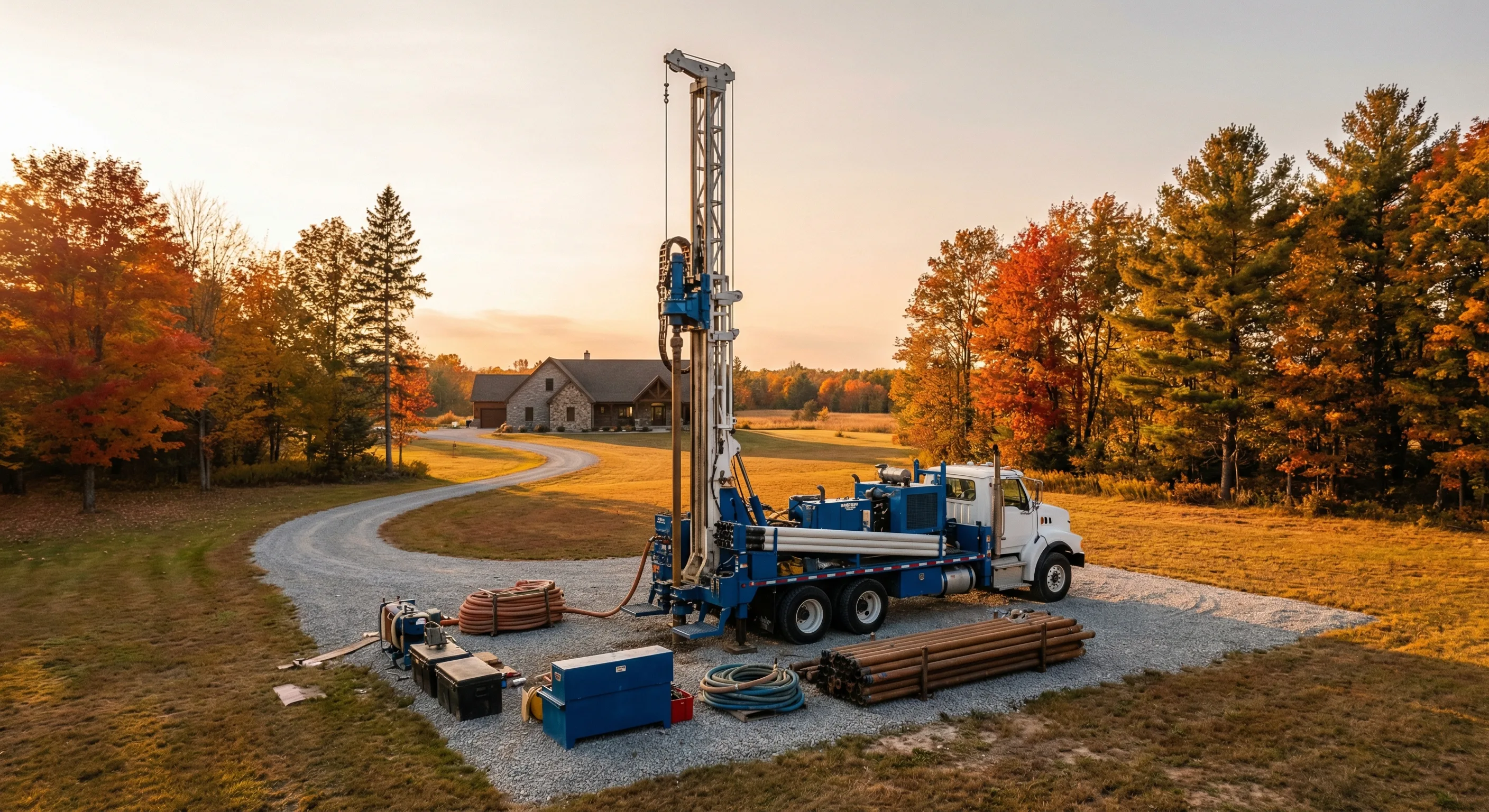
Our emergency response methodology is designed for speed and effectiveness. When you call our emergency line, our dispatcher gathers key information about the symptoms — no water, low pressure, discoloured water, unusual sounds from the pressure system — and walks you through basic troubleshooting checks such as verifying the circuit breaker and inspecting the pressure gauge. This triage process often identifies simple issues that can be resolved over the phone, saving you the cost of a service call. When a technician dispatch is needed, our crews arrive with fully stocked service vehicles carrying common submersible pumps, pressure tanks, pressure switches, control boxes, wiring, and fittings. For pump replacements, our service rig can pull a submersible pump from wells up to several hundred feet deep, and we carry the equipment to perform same-day installations in most cases. We test the repaired system thoroughly — checking pressure, flow rate, amperage draw, and cycle timing — before leaving your property, and we explain exactly what failed and what we did to fix it.
Emergency well problems follow a clear seasonal pattern in Simcoe County that homeowners should be aware of. Late spring through early fall is peak season for lightning-related pump failures, with July and August storms accounting for the majority of sudden electrical damage calls. We strongly recommend installing surge protectors on all well pump circuits — a modest investment that can prevent thousands of dollars in damage. Winter emergencies peak during prolonged cold snaps in January and February, when temperatures drop well below minus twenty degrees Celsius and stay there for days. Frozen water lines are the most common winter call, followed by pressure switch malfunctions caused by extreme cold in unheated pump houses or exposed well heads. Spring thaw in March and April is when contamination emergencies spike, as rapid snowmelt and heavy rain overwhelm the ground's absorption capacity and surface water infiltrates wells with inadequate seals. For well abandonment and decommissioning work, summer and fall are the most practical seasons, as frozen ground in winter makes excavation more difficult and costly. Planning ahead for these seasonal patterns — surge protection before storm season, system checkups before winter, and water testing after spring thaw — can prevent many emergencies entirely.
Simcoe County's diverse geology creates distinct emergency patterns in different areas. Properties along the Wasaga Beach corridor and near Georgian Bay are particularly exposed to summer lightning activity, and the shallow water tables in these sandy areas mean that even brief pump outages can allow the water level in the well to recover quickly — which is good news for getting back up and running fast. In Springwater Township, the heavy clay soils hold water at the surface during spring melt, increasing the risk of contamination events for wells with marginal surface seals. The fractured bedrock areas of Clearview and the Blue Mountains sometimes experience sudden yield changes after seismic activity or heavy pumping by neighbours, and hydrofracturing can often restore lost production in these wells. Around Barrie, the mix of glacial deposits and urban development means that well abandonment and decommissioning is an increasingly important service as properties connect to expanding municipal water systems — Ontario Regulation 903 requires that any well no longer in use be properly sealed to protect the aquifer.
Homeowners should keep a few critical pieces of information readily accessible in case of a well emergency: the location of your electrical panel and the breaker that controls the well pump, the location of your pressure tank and pressure gauge, and your well record if available. Knowing these basics allows our dispatcher to walk you through immediate checks and can sometimes resolve the issue without a service call. If you lose water and the breaker has not tripped, do not repeatedly reset the pressure switch or attempt to restart a pump that may have failed — running a damaged motor can cause additional problems including electrical fire risk. Call us, describe the symptoms, and let our experienced technicians diagnose the issue safely. We also recommend that every household on well water keep a small supply of stored water — even a few jugs in a basement — for drinking and sanitary use during the hours it may take to complete an emergency repair. Mighton's Well Services treats every emergency call with urgency because we know from our own experience as a Simcoe County family that losing your water supply disrupts everything.
What's Included
24/7 Emergency Response
Around-the-clock emergency service for complete water loss, sudden pressure failure, pump malfunction, and contamination events. We prioritize emergency calls and dispatch experienced technicians equipped to diagnose and resolve the most common well and pump failures. Our goal is to restore your water supply as quickly as possible, typically within the same day for standard pump replacements.
Well Abandonment & Decommissioning
Proper abandonment of unused, damaged, or obsolete wells in accordance with Ontario Regulation 903. Abandoned wells that are not properly sealed pose a serious threat to groundwater quality — they act as direct conduits for surface contaminants to reach the aquifer. We remove pumps and piping, fill the well bore with approved sealing materials, and file the required documentation with the Ministry of the Environment.
Hydrofracturing
High-pressure water injection to widen and clean existing fractures in bedrock formations, improving water flow to the well. Hydrofracturing is an effective technique for increasing yield in low-producing bedrock wells, which are common in some areas of Simcoe County where the rock has limited natural fracturing. Many wells see a significant yield improvement after hydrofracturing treatment.
Borehole Drilling
Specialized borehole drilling for geotechnical investigations, environmental site assessments, soil sampling, and groundwater monitoring. These boreholes are drilled to specific diameters and depths as required by the project engineer or environmental consultant. We work with engineering firms across Simcoe County on projects ranging from pre-construction site assessments to contamination investigations.
Dewatering Wells
Installation and operation of dewatering well systems to lower the water table during construction, excavation, or remediation projects. Effective dewatering is essential for foundation work in the high-water-table areas along the Nottawasaga River valley and near Georgian Bay. We design wellpoint systems and deep well dewatering solutions tailored to site hydrogeology.
Irrigation Wells
Design and installation of high-capacity irrigation wells for farms, golf courses, nurseries, and commercial landscapes. Irrigation wells must deliver sustained high flow rates without depleting the aquifer. We assess the hydrogeological capacity of your site, obtain necessary Permit to Take Water approvals, and install pump systems optimized for irrigation demand patterns.
How It Works
Emergency Call & Triage
When you call our emergency line, we gather information about your symptoms — no water, low pressure, discoloured water, unusual noises — and walk you through basic checks like the circuit breaker and pressure switch. This helps us arrive with the right equipment and parts to resolve the issue quickly.
On-Site Diagnosis
Our technician tests the electrical system, pressure tank, pressure switch, and control box to isolate the failure point. For submersible pump issues, we check amp draw and insulation resistance to determine if the pump motor has failed before pulling the pump from the well.
Repair or Replacement
We perform the necessary repair on-site — whether it is replacing a pressure switch, installing a new pressure tank, or pulling and replacing a failed submersible pump. We stock common pump sizes, tanks, and controls on our service vehicles to minimize return trips and downtime.
System Testing & Verification
After the repair, we test the complete system including pressure, flow rate, amp draw, and cycling to confirm proper operation. If the failure was caused by lightning, we recommend surge protection to prevent recurrence. We provide a clear explanation of what failed and why, along with your invoice and warranty information.
Common Problems We Solve
Lightning-Damaged Pump System
Summer thunderstorms in Simcoe County frequently cause lightning damage to well pump systems. A nearby strike can destroy the pump motor, control box, pressure switch, and wiring in an instant, leaving you with no water and no warning.
Our Solution: We carry common submersible pump sizes and control boxes on our service vehicles for rapid replacement. After restoring your water, we install a surge protector on the pump circuit to prevent future lightning damage. The replacement cost is typically covered by homeowner insurance — we provide the documentation you need for your claim.
Frozen Water Lines
Despite proper installation below frost line, water lines can freeze during extreme cold snaps, particularly in exposed runs, near exterior walls, or where insulation has been disturbed. Frozen lines can also indicate that the pitless adapter has shifted or the well casing above the adapter is allowing cold air to reach the connection.
Our Solution: We thaw frozen lines using safe methods and identify why the freeze occurred. Solutions include repairing or replacing the pitless adapter, adding insulation, installing heat trace cable on vulnerable sections, and ensuring the well cap is sealed against cold air infiltration. Preventing recurrence is as important as the immediate thaw.
Well Contamination After Spring Thaw
Spring in Simcoe County brings rapid snowmelt and rising water tables that can overwhelm marginally sealed wells. Surface water carrying bacteria, road salt, and other contaminants enters the well through casing defects, failed annular seals, or submerged well caps in low-lying areas.
Our Solution: We shock-chlorinate the well to address immediate bacterial contamination, then inspect for the entry point. Repairs may include improving the surface seal, replacing the well cap, regrouting the annular space, or installing a casing liner. UV disinfection provides ongoing protection. We retest the water after treatment to confirm the contamination has been eliminated.
Sudden Complete Water Loss
Waking up to no water is alarming. Common causes include a tripped circuit breaker, failed pressure switch contacts, pump motor burnout, a broken drop pipe connection inside the well, or the well being pumped dry if demand exceeded capacity or a plumbing leak ran the pump continuously overnight.
Our Solution: We guide you through basic electrical checks by phone to potentially resolve simple issues before dispatching a technician. If the pump has failed, we arrive equipped to pull the submersible pump and install a replacement. For most residential systems, we can restore water within several hours of arriving on site.
Abandoned Well Posing Contamination Risk
Old, unused wells that were never properly sealed — whether from a previous home, farm operation, or test hole — are direct conduits for surface contamination to reach the aquifer. They are also physical hazards, particularly if the casing has deteriorated and the opening is concealed by vegetation.
Our Solution: Ontario Regulation 903 requires that unused wells be properly decommissioned. We remove any remaining equipment, fill the well bore with approved sealing materials from bottom to surface, cut the casing below grade, and weld a steel plate over the top. A well abandonment record is filed with the Ministry of the Environment. This permanently eliminates both the contamination pathway and the physical hazard.
Have a Emergency Service Question?
Our experienced team is ready to help. Call for a free phone consultation or request a site visit.
Frequently Asked Questions About Emergency Service
What should I do first when I have no water?
How quickly can you respond to an emergency call?
Do you charge extra for after-hours emergency service?
What is hydrofracturing and will it help my well?
Why do I need to decommission an old well on my property?
Can you install a well for construction dewatering?
How do I protect my well pump from lightning damage?
What causes a well to run dry temporarily?
Is well abandonment expensive?
Do you service irrigation wells for farms?
What is the difference between well abandonment and well decommissioning?
Can you help if my well water suddenly turns brown after heavy rain?
Emergency Service Across Simcoe County & Grey County
We provide emergency service services across 19 communities within a 50km radius of our home base in Stayner. Whether you're in Wasaga Beach, Barrie, or Collingwood, our team has the local knowledge and experience to deliver reliable results.
Related Services
Emergency Service often goes hand-in-hand with these other services we provide:
Ready to Get Started With Emergency Service?
Contact our experienced team for a free consultation and estimate. Over 60 years of trusted service.