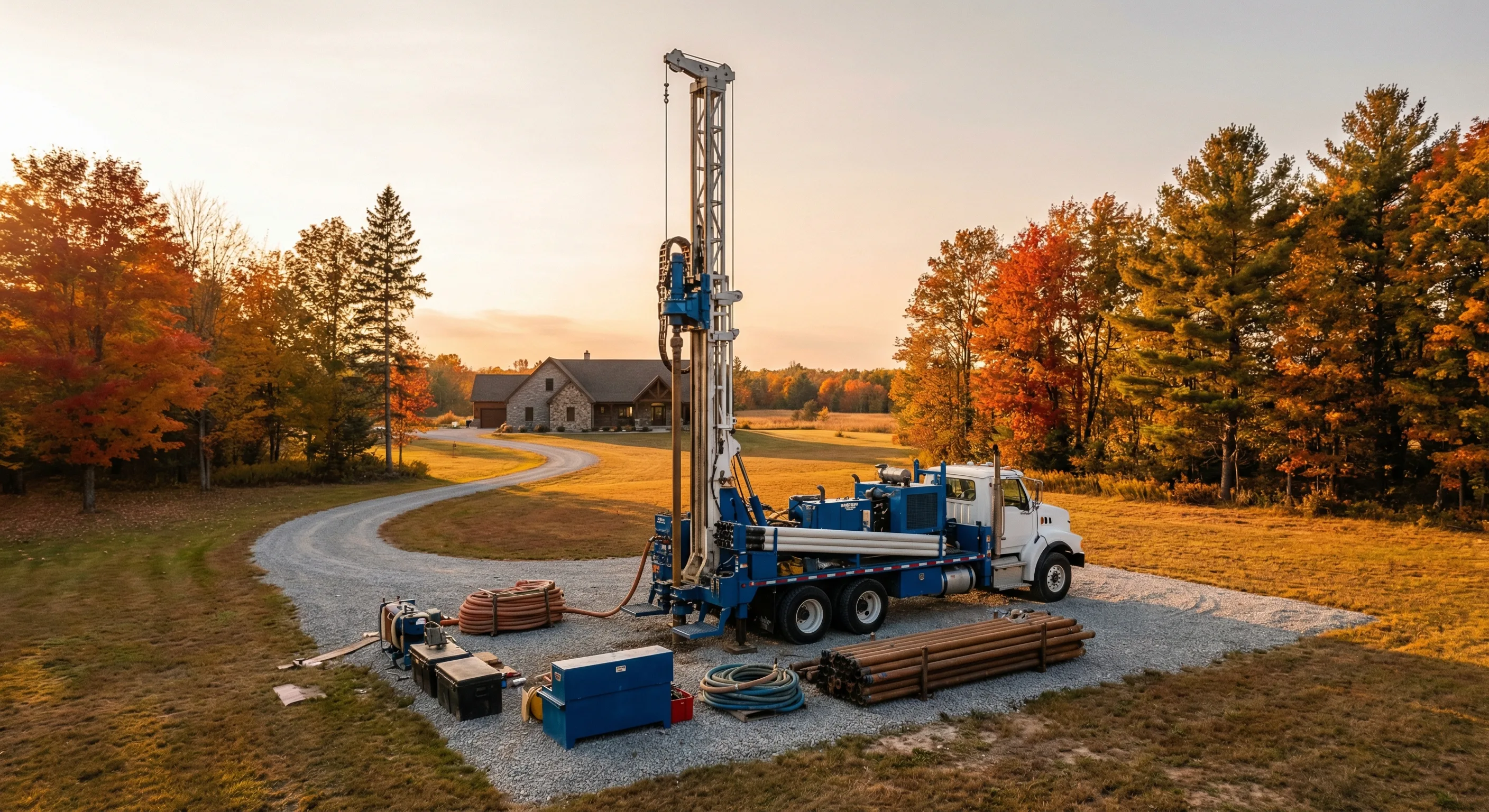
Pump & Pressure System Services in Midland
Professional pump systems services for Midland homes, farms, and businesses.
Midland's Georgian Bay shoreline setting and biological groundwater conditions create pump and pressure system challenges that are primarily driven by biofilm — the slimy accumulation of iron and sulphur bacteria that colonizes every component of the water system. While all wells have some bacterial presence, Midland's combination of dissolved iron, moderate temperatures, and favourable water chemistry supports especially active bacterial communities that require ongoing management to keep pump systems performing reliably.
Biofilm does not just coat surfaces passively — it actively degrades system performance. Inside the pump, biofilm on impeller and diffuser surfaces creates drag that reduces hydraulic efficiency. In the pressure tank, biofilm coats the bladder and accumulates as a thick layer that reduces effective storage volume. Check valves fouled with biofilm fail to seat properly, allowing water to drain back down the well and forcing the pump to refill the column at each startup cycle. Even the pressure switch can be compromised as biofilm and associated mineral deposits block the sensing port.
Our pump and pressure services in Midland account for the biological environment from the design stage through ongoing maintenance. We select materials that resist biofilm adhesion, install systems with accessible components for easy cleaning, and maintain a service schedule that keeps bacterial accumulation below the threshold where it affects performance. For Midland homeowners, understanding that their water system requires biological management — not just mechanical maintenance — is the key to reliable long-term operation.
Pump Systems Services We Provide in Midland
Submersible Pump Installation
Installation of submersible well pumps sized to match your well yield, depth, and household demand. Submersible pumps sit inside the well casing, submerged below the water level, and push water to the surface. We install pumps from leading manufacturers with stainless steel construction for long life in the mineral-rich groundwater common throughout Simcoe County.
Jet Pump Installation
Jet pumps are surface-mounted units suitable for shallow wells up to 25 feet deep (single-line) or up to 90 feet (dual-line). They are common in older installations and certain applications where surface access to the pump is preferred. We install, repair, and convert jet pump systems, and can advise when upgrading to a submersible pump would improve performance and reliability.
Pump Repair & Replacement
Diagnosis and repair of pump failures including motor burnout, impeller wear, check valve failure, electrical faults, and control system malfunctions. When repair is not cost-effective, we provide complete pump replacement using properly sized equipment. We pull and reinstall submersible pumps with our service rig and can typically restore your water supply the same day.
Pressure Tank Installation
Pressure tanks store pressurized water and reduce the number of pump start cycles, extending pump motor life. We install and replace bladder-style pressure tanks in sizes matched to your pump capacity and household demand. Waterlogged or failed tanks cause rapid pump cycling — a common service call that we can resolve quickly with a properly sized replacement.
Common Pump Systems Issues in Midland
Pump efficiency loss from biofilm coating on internals
Iron and sulphur bacteria colonize pump impellers, diffusers, and intake screens, creating a layer of biological and mineral deposit that increases surface roughness and narrows flow passages. This biofilm coating can reduce pump efficiency by ten percent or more, increasing energy consumption and reducing water delivery.
Our Solution: We include pump sanitization as part of annual well chlorination, running disinfectant through the pump to kill and flush biofilm. During pump pull-and-inspection visits, we physically clean accessible components. Pumps with smooth, polished stainless steel internals resist biofilm adhesion better than those with rougher surfaces.
Check valve failure from biofilm preventing proper sealing
Biofilm accumulation on check valve discs and seats creates an uneven surface that prevents the valve from sealing completely. Water leaks back down the well when the pump shuts off, causing the pump to restart frequently to maintain pressure and wasting energy as it refills the drop pipe at each cycle.
Our Solution: We install spring-loaded check valves with smooth, polished sealing surfaces that are easier to clean and more resistant to biofilm interference than gravity-operated designs. During annual service, we inspect and clean or replace check valves as needed. A second check valve at the pitless adapter provides redundant backflow protection.
Pressure tank odour and water quality degradation from bacterial growth
The warm, dark interior of a pressure tank provides an ideal environment for bacteria to multiply. Sulphate-reducing bacteria in the tank produce hydrogen sulphide gas, giving the water a rotten-egg smell that may be worse from the taps than directly from the well because the bacteria have had time to multiply in the tank.
Our Solution: Regular tank flushing and sanitization during annual well chlorination keeps bacterial populations low. We recommend tanks with antimicrobial bladder coatings for Midland installations. In severe cases, installing a UV disinfection system before the pressure tank breaks the cycle of bacterial introduction, though this is non-standard and requires specific engineering to ensure proper flow rates.
Run Chlorinated Water Through Your Entire Midland System During Disinfection
The most common mistake during well chlorination is treating only the well and not running the disinfectant through the pressure tank, water heater, and all household taps. Bacteria surviving in the tank and plumbing will immediately recolonize the freshly treated well, cutting the effective duration of the treatment dramatically. Open every tap in the house until you smell chlorine, then close them and let the system sit for the recommended contact period. This whole-system approach gives you the longest interval of clean, odour-free water between treatments.
Need Pump Systems in Midland?
Call us for a free phone consultation or request a site visit. We're your local experts.
Pump Systems in Midland: Frequently Asked Questions
Why does my Midland water smell worse from the hot water tap?
How often should my Midland pump system be disinfected?
Can a UV system prevent biofilm in my Midland pressure tank?
What causes the slimy orange deposits in my toilet tank and pipes?
Is my Midland pump system harder to maintain than one in other areas?
Other Services We Provide in Midland
Beyond pump systems, we offer a full range of well and water services in Midland:
We Also Provide Pump Systems in Nearby Areas
Serving communities across Simcoe County and Grey County from our home base in Stayner.
Serving Midland and Surrounding Areas
Ready to Get Started in Midland?
Contact our experienced team for a free consultation and estimate. Over 60 years of trusted service.